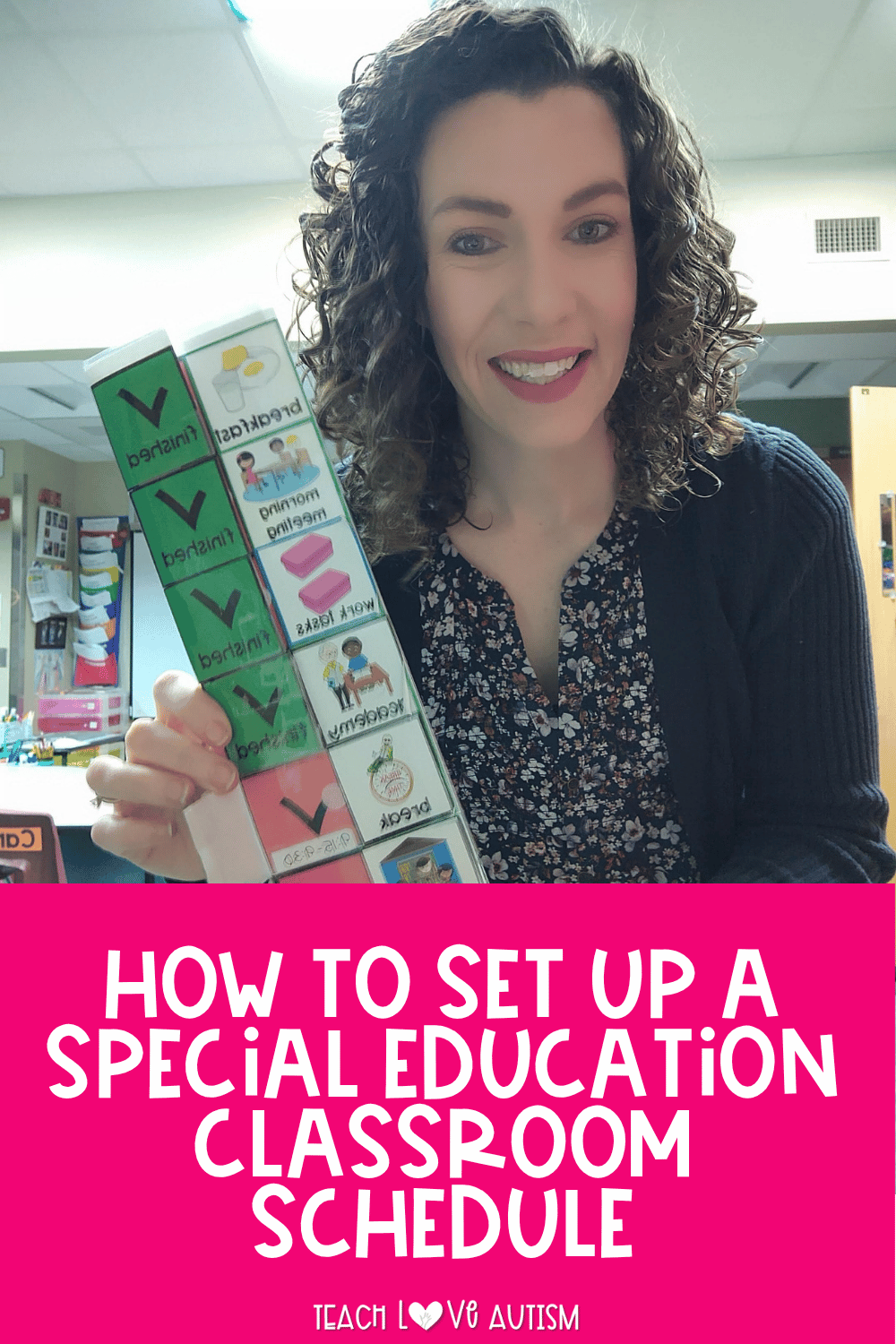


Have you ever sat down to create your special education classroom schedule and wondered how everything could possibly fit? You have your students needing different instruction, paraprofessionals to schedule, therapies, specials, lunches, breaks, and independent work. Then you realize two of your students need the same adult at exactly the same time. Suddenly, creating a schedule feels more like solving a giant puzzle than planning a school day. I have spent plenty of time staring at my schedule, moving things around, and wondering how one change affected everything else.
Start Your Special Education Classroom Schedule With the Non-Negotiables
When I create my special education classroom schedule, I always start with the parts of the day I can’t change. Trying to schedule instruction first usually creates more work later. Instead, I open a spreadsheet and enter the start and end times of our school day. Then, I divide the time between them into 15-minute increments.
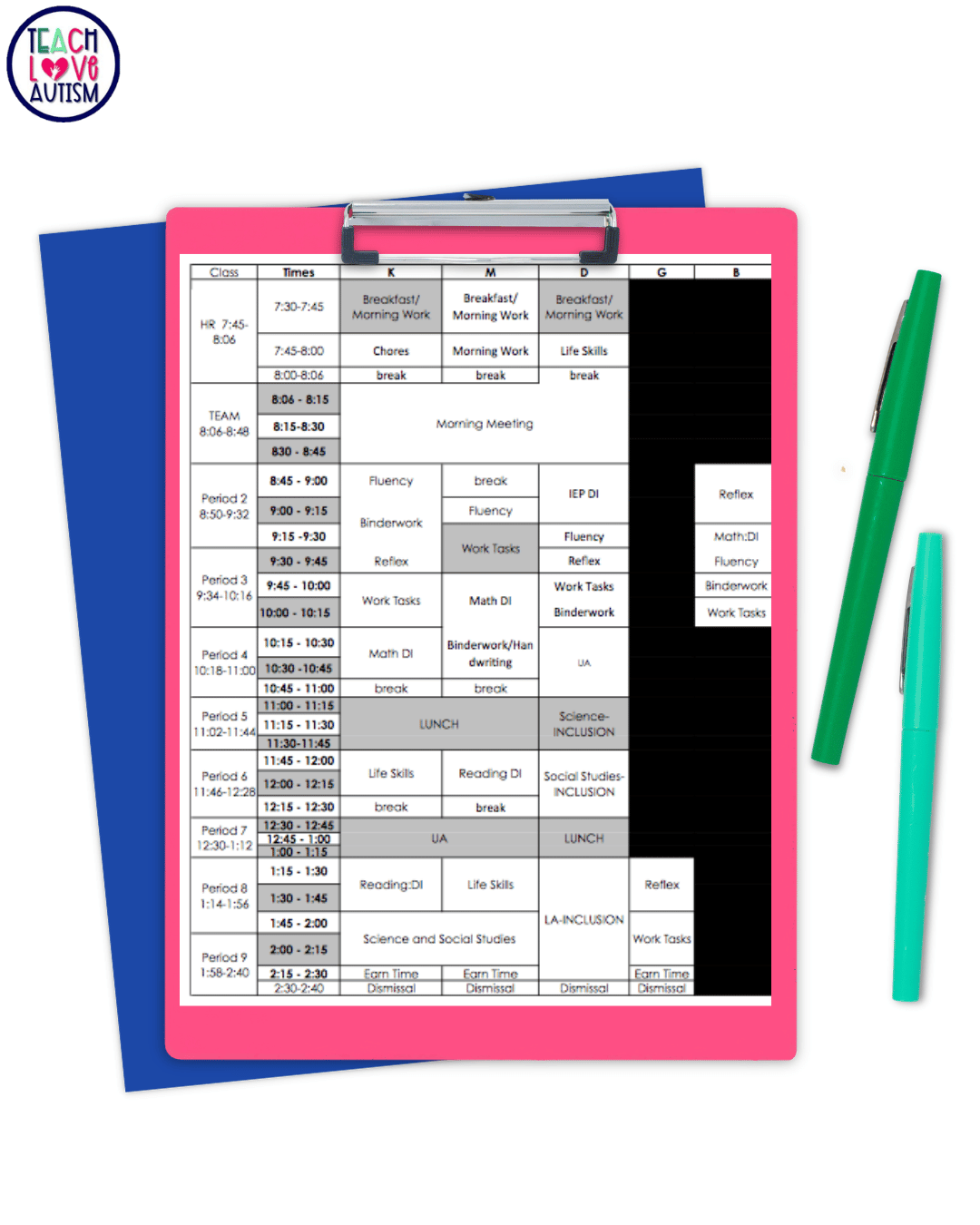
Next, I add anything that already has a set time. Lunch, recess, specials, arrival, and dismissal are some of my first entries. Your list may also include therapies, inclusion classes, or other services your students receive. Think of these times as the framework that everything else must fit around.
I also look at staff responsibilities that couldn’t easily move. Paraprofessional lunches and breaks also need space in my special education classroom schedule. A student rotation doesn’t work if the adult needed for that station is unavailable. Adding those responsibilities early helps me avoid creating a schedule I can’t actually staff.
At this point, don’t worry if your spreadsheet still has large empty spaces. Those spaces are exactly what you want to see. They show you where instruction, independent work, breaks, and other classroom activities can eventually fit. You’re building the outside edges of the puzzle before worrying about every individual piece.
Decide What Your Students Need in Your Special Education Classroom Schedule
Once the fixed times are entered, I make a list of everything my students need during their day. This part of a special education classroom schedule will look different in every classroom. Your students, goals, staffing, and instructional priorities determine what belongs on that list. Don’t copy another teacher’s rotations from in your building or online simply because their schedule looks organized.

Start by thinking about the instruction your students need directly from an adult. You might need dedicated times for reading, math, communication, life skills, or individualized goals. Then consider which activities a paraprofessional can lead after receiving appropriate training and directions. This helps you see how many adult-led rotations you actually need.
In my classroom, I use several teacher-led stations. Reading and math are led by the classroom teacher. Paraprofessionals also run stations, such as Fluency. Assigning specific adults to these stations helps me start to see how my students can rotate throughout the day.
Next, I identify activities my students can complete with greater independence. My independent stations include life skills, binderwork, work tasks, and Reflex Math. These rotations serve an important purpose within my special education classroom schedule. They also create opportunities for my students to practice working without constant adult support.
Before deciding how often your students visit each station, look at what each individual student actually needs. One student may need daily reading instruction but less frequent practice in another area. Another one may need additional opportunities to practice a particular IEP goal. Your rotations should reflect your student needs rather than giving every student an identical schedule.
Consider Student Stamina When Building Your Special Education Classroom Schedule
One question I often hear is, “What about my students who can only work for a few minutes?” Those students still benefit from a predictable special education classroom schedule. In many cases, knowing what is happening next makes their day feel much more manageable. The difference is how I structure their time.

A 15-minute block doesn’t mean your student must complete challenging academic work for all 15 minutes. You can divide that block based on what your student can successfully manage. You might have a student complete a short activity before transitioning to movement, sensory support, or another appropriate break. Over time, you can adjust that balance as your student’s needs change.
Look at patterns throughout the entire day as you make these decisions. Scheduling several demanding activities back-to-back may make each rotation harder than necessary. I like to consider what my students are doing before and after each instructional block. Alternating different types of activities can make a special education classroom schedule more manageable.
You also don’t need to make every student’s schedule look the same. Consistency means your students can understand and predict their own routines. It doesn’t mean every child follows an identical order of activities. Your special education classroom schedule should provide structure while still leaving room for individual needs.
Add Stations to Your Special Education Classroom Schedule
After identifying my student needs, I start turning those needs into actual stations. I separate my stations into adult-led and independent options. This makes it easier to see which rotations require staffing. It also shows me where my students could work more independently.

Think about what actually happens at each station before adding it to your special education classroom schedule. Ask yourself who will run it, which of your students need it, and what your students will practice there. You should also decide whether the station needs to happen daily. Answering those questions keeps you from creating rotations simply to fill empty spaces.
You don’t need a huge number of stations to create an effective schedule. Fewer purposeful stations can make it easier for your students and staff to learn. You can always add or adjust stations once your routines are established. Start with the areas your students need most.
The physical location of each station matters too. Your students should eventually learn where to go when they see a station on their schedules. For example, seeing Math might always direct your students to one instructional table. Independent Work might send them to a clearly identified workspace where the work tasks are set up.
This becomes especially important when you begin adding visual supports to your special education classroom schedule. Matching a schedule visual to a clearly labeled classroom area can make transitions more concrete. We will get into exactly how I set up those visual supports later. First, the actual student rotations need to work on paper.
Build Each Student’s Special Education Classroom Schedule
Now comes the part that usually takes the most time. Once I know my stations, I begin assigning each of my students to the rotations they need. This is where my special education classroom schedule starts looking a bit complicated. I spend lots of time moving boxes around my spreadsheet.
I recommend starting with your students who have the fewest scheduling options. You might have a student who may leave the room for services at several specific times. Another one of your students may require adult support for most instructional activities. Placing those students first gives you more flexibility when scheduling your students with fewer restrictions.
Then work through one student at a time. Add required adult-led instruction first, followed by other needed rotations. After placing each activity, look across that specific student’s entire day. Make sure you’ve considered both instructional priorities and the student’s ability to manage the line up.
Continue repeating this process until all your students have the rotations they need. Then go back through your special education classroom schedule and check each student again. I found it helpful to review one student vertically and one time block horizontally. That simple check caught many conflicts before the schedule reached my classroom.
Check Staffing Across Your Schedule
Once your student rotations are in place, look at every time block from the staff perspective. This step can uncover problems hiding inside an otherwise perfect special education classroom schedule. You might discover you have a student assigned correctly, but an adult is not available. I always checked staffing before considering my schedule finished.

Move through your schedule one time block at a time. Identify every station requiring a teacher or paraprofessional during that period. Then compare that number with the adults actually available. Remember to account for lunches, breaks, meetings, and other responsibilities.
This is where independent stations become incredibly helpful. They aren’t simply activities used to fill empty spaces in your special education classroom schedule. They allow your students to practice independence while adults provide targeted instruction elsewhere. However, your students should already have the skills needed to complete those activities with limited support.
If staffing conflicts keep appearing, don’t try to solve everything by stretching your staff thinner. Move rotations, shorten groups, or reconsider which activities truly require adult support. Sometimes one small change opens several possibilities elsewhere. Your schedule needs to work for the people actually implementing it.
Create Staff Schedules From Your Special Education Classroom Schedule
Once my student rotations are in place, creating staff schedules becomes much easier. The student portion of my special education classroom schedule already shows where support is needed. I can use that information to determine what each adult should be doing. Then I add their lunches, breaks, and other responsibilities.
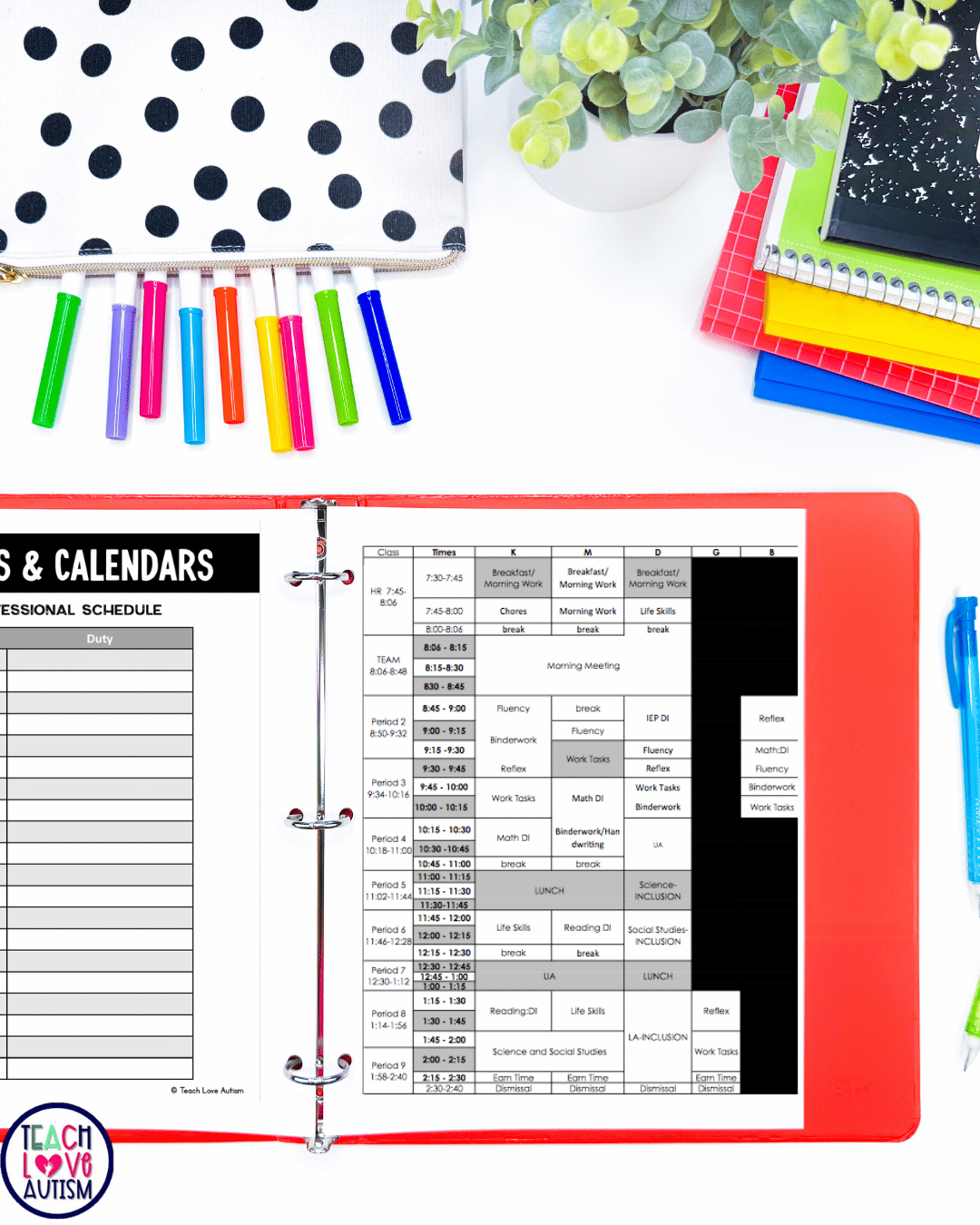
I create an individual schedule for every staff member. I don’t want anyone wondering where they should be during a particular rotation. Each person can quickly see their assigned station and responsibilities. This also reduces the number of questions I need to answer throughout the day.
Be as specific as your classroom team needs. Instead of writing only “Reading,” you might identify the station and the names of your students receiving support. You could also include setup, transition, or data collection responsibilities when necessary. The goal is to make your special education classroom schedule easy for everyone to follow.
I also give my staff members their own copies of their schedules. Copies can stay in paraprofessional binders or another location that is accessible. I keep additional staff scheduling information near my desk as well. Everyone has a reference instead of relying on memory.
Your staff schedules may need adjustments after you begin using them. Pay attention to whether transitions leave enough time or one person is constantly rushing. Ask your team where they notice scheduling problems. They often see challenges you might miss when working with another group.
Turn Your Special Education Classroom Schedule Into a Visual System
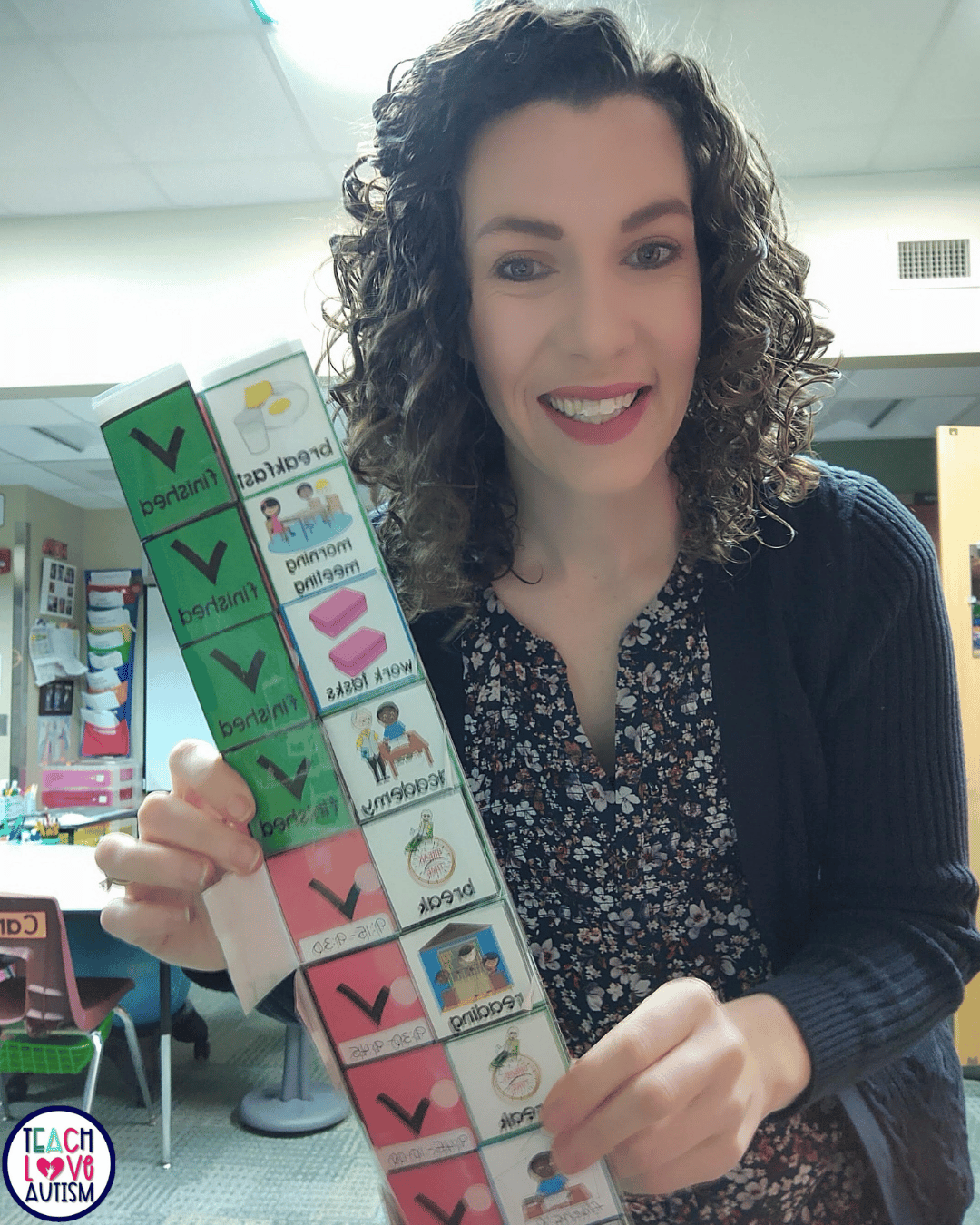
Once your schedule works behind the scenes, your students need a way to understand it. A spreadsheet may organize your special education classroom schedule beautifully, but it isn’t always meaningful to your students. This is where visual schedules became an important part of my classroom. They helped turn the schedule I created into something my students could actually use.
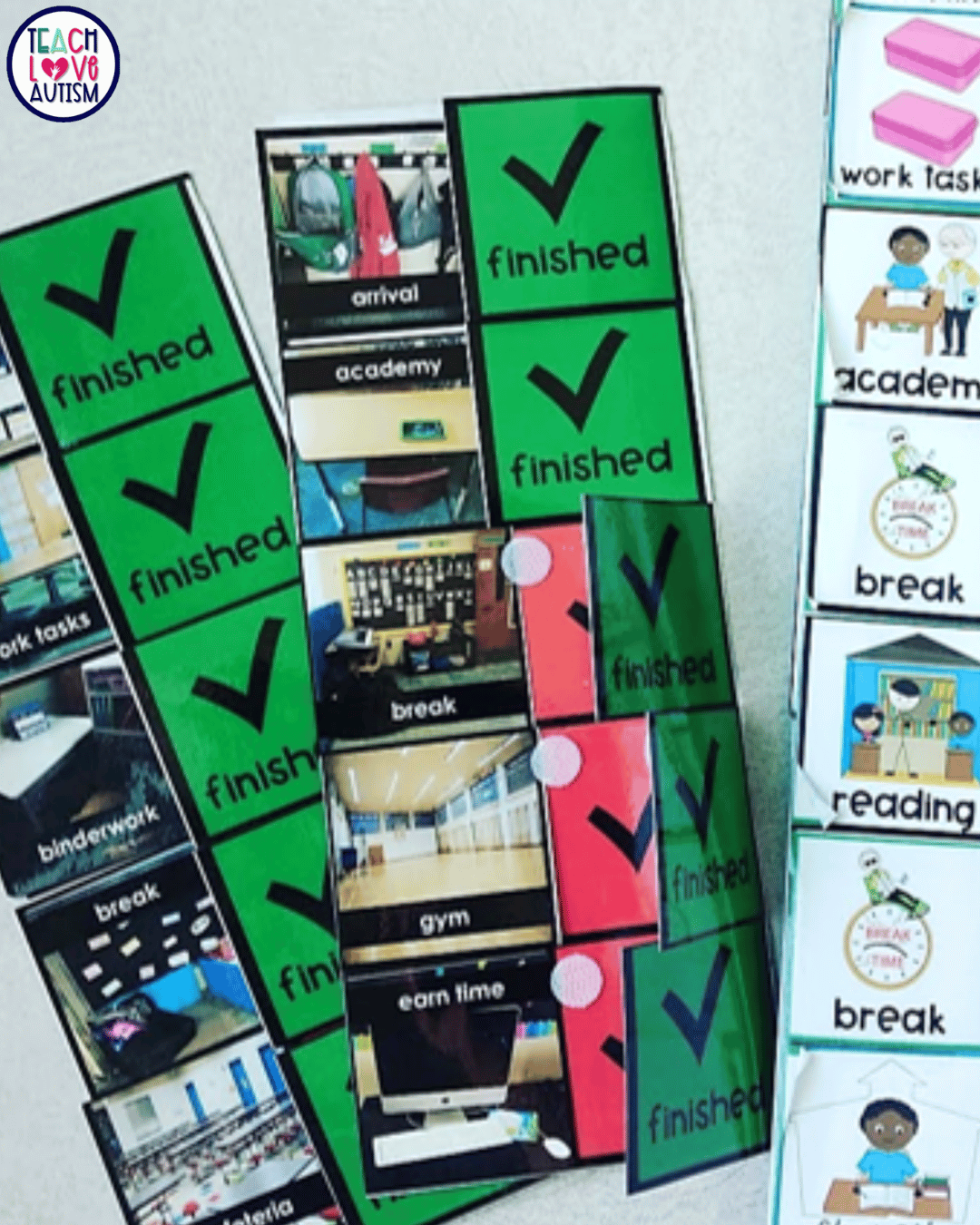
Start by deciding how much scheduling information each of your students needs to see. Some of your students may successfully follow a whole-class visual schedule displayed at the front of the room. Others may benefit from having their own individual schedule. You might also need only a First/Then visual showing two activities at once.
Your visual system should connect to the classroom itself whenever possible. If a student’s schedule shows they have math, your student should know where Math takes place. Using matching visuals at stations can make that connection clearer. You students can match what they see on their schedules with where they need to go.
My Classroom Visual Schedule helps to create those connections throughout the classroom. It includes large schedule cards, station labels, and smaller matching visuals for individual schedules. The station cards can identify areas like Math, Sensory, Life Skills, and Independent Work. This lets you carry the same visual language across your special education classroom schedule.
I also include a large First/Then support and editable text on schedule cards. There are clock visuals and “Where are we?” door visuals too. You can choose the pieces that make sense for your classroom rather than using everything. The goal is creating a visual system your students can understand and use consistently.
For your students needing a more individualized option, you can also use the Editable Visual Schedule. It works with the individual images from my Classroom Visual Schedule resource. This can help keep visual cues consistent between classroom stations and personal schedules.
Teach Your Students to Follow Their Special Education Classroom Schedule
Putting visual cards on the wall doesn’t automatically teach your students how to use them. I treat following a special education classroom schedule like any other classroom routine. My students need modeling, practice, prompting, and time. I don’t expect them to understand the system simply because it is available.

Begin by showing your students where their schedule is located. Model how to check the first activity before asking your students to do it independently. Then physically guide your students toward the corresponding classroom area when needed. Keep your language simple and consistent during these early practices.
You might say, “Check your schedule. What’s next?” Then help your student locate the matching visual and transition to that area. At the station, show your student how the visual matches the classroom label. You may need to provide more support during the first days of using your special education classroom schedule. That’s okay. The goal is to gradually reduce prompting as your students learn the routine.
Remember that independence will look different for your different students. Your one student may follow an entire visual schedule without adult help. Your other student may successfully transition between two activities using a First/Then support. Both of your students are learning to use structure to navigate their day.
Give Your Special Education Classroom Schedule Time to Work
Your first special education classroom schedule probably won’t be your final one. I always learn more once my students and staff use it. A schedule that looks perfect on my computer could feel completely different during an actual school day. Give yourself time to see how the routines work before making major changes.
Pay attention to the places where problems happen consistently. Maybe transitions feel rushed, a rotation is too long, or several of your students need support at once. Look for patterns instead of changing your special education classroom schedule after one difficult day. Once you identify the actual problem, you can make a more purposeful adjustment.
Often, you don’t need to rebuild the entire schedule. Switching two rotations or changing a station’s length may be enough. Your special education classroom schedule should change as you learn more about your students and classroom routines. The goal is creating a schedule that continues working for your classroom.
Find More Visual Supports for Your Special Education Classroom
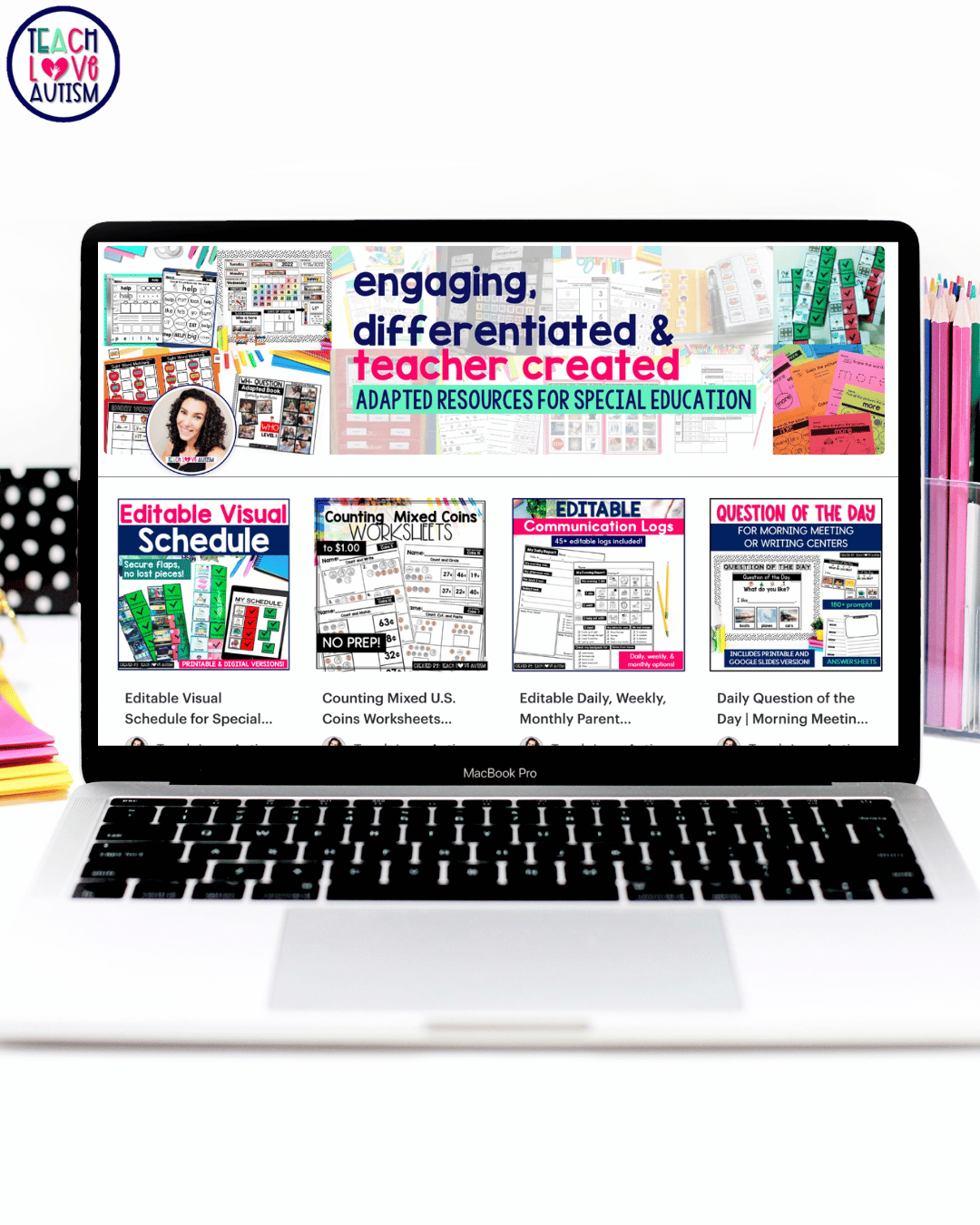
Once you have your special education classroom schedule established, you may notice other places where visuals could support independence. A schedule is only one way visual supports can help your students understand classroom routines. The right support depends on what your students need.
If you want more options, explore my store for additional special education resources. You’ll find different visual schedule options alongside resources for errorless learning, work tasks, social narratives, and other classroom routines. These resources can help you build systems around the schedule you’ve already created.
You don’t need to introduce every support at once. Start with the areas where your students need the most structure or independence. Then add resources intentionally as you learn what works for your classroom. Your special education classroom schedule can become the foundation for those routines.
Creating a Special Education Classroom Schedule That Works
The work you put into your special education classroom schedule can make the rest of your day run more smoothly. Your students will know what is happening and where they should go next. Your staff members will understand their responsibilities without constantly stopping to ask. You also have a structure that helps everyone move through the day with greater consistency.
Your schedule doesn’t need to look exactly like mine to work well. It needs to make sense for your students, staff, and classroom routines. Build the structure first, teach everyone how to use it, and give the system time to develop. That’s when a complicated scheduling puzzle can finally start to feel like routine.
Save for Later
Save this post to your favorite special education Pinterest board so you can come back when you’re building your special education classroom schedule. Whether you’re planning for back to school or adjusting routines midyear, you’ll have these scheduling steps ready when you need them.