Sharing is caring!
If you’re looking for fresh ways to boost independence in your classroom, task boxes are the way to go! They’re simple, effective, and a great way to engage our students in meaningful work they can complete independently. I’m a huge fan of task boxes for independent work stations because they’re so versatile. You can adapt them to fit just about any skill level or subject area. Today, I’m sharing seven simple task box ideas that will make setting up independent work stations a breeze. Let’s explore how you can bring a little more independence and excitement into your classroom!
Benefits of Simple Task Box Ideas for Building Skills
Task boxes are a fantastic way to build skills in a structured yet totally approachable way. One of the things I love most about simple task box ideas is how they encourage our students to practice essential skills independently. While doing so, it boosts their confidence along the way. Task boxes are perfect for targeting specific skills, whether it’s fine motor work, sorting, or counting. Whatever your students need to work on! They’re also ideal for reinforcing academic concepts, like letter recognition, number sequencing, or even basic math operations.
Task boxes are easy to set up and can be tailored to fit individual needs, making them a go-to for any inclusion classroom. They help our students get comfortable with routines and learn at their own pace, which is so important for building self-reliance. Plus, task boxes are easy to swap out and refresh throughout the year, so you can keep things engaging and relevant. With these simple task box ideas, you’re setting your students up for success in a fun and hands-on way while giving them the tools they need to grow their skills independently!
7 Examples of Simple Task Box Ideas to Start Using Now
Let’s look into some of the newest simple task box ideas I have incorporated into my room. I’m always looking for fresh, engaging ways to keep my students learning independently. I can’t wait to share these ideas with you.
Sorting Canned Items and Perishable Items
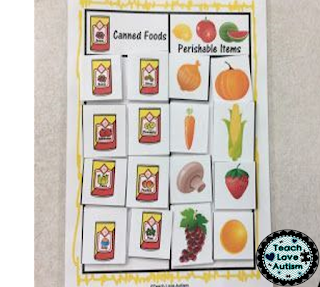
One of my favorite task boxes you’ll find is my Grocery Store Sorts. My resource includes 20 different sorting tasks focused on familiar grocery store categories like fruits and vegetables, dairy and meats, canned items and condiments, and breakfast, lunch, or snack foods. This activity works especially well in an inclusion classroom where your students benefit from clear expectations and real-world connections. The familiar food items make the task approachable while still targeting important categorization and visual skills.
To use this as a task box, you can print and laminate the boards and pieces. Then, add Velcro or magnetic tape so your students can sort items directly onto each board. I’ve used these in file folders, cookie trays, and independent work stations. They’re easy to make fit into whatever system you already have in place. Your students will then match each food item to its correct category using the visual labels. This allows them to work independently once the routine is introduced.

Simple Task Box Ideas for Putting In Activities
Here’s a super simple task box idea that my students love! All you need is a drinking cup with a small hole at the top where the straw usually goes, plus some colorful pony beads. It makes for an awesome put-in task perfect for fine motor practice! I just popped the straw out and added the beads. It was such a breeze to set up, and my students enjoyed dropping the beads into the cup, working those little finger muscles in a fun and engaging way.
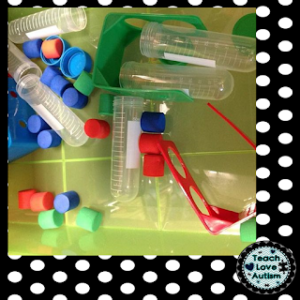
Another one of my favorite simple task box ideas is an assembling activity. This assembly task has students sorting colorful cylinders, like reds, blues, or greens, into matching test tubes. Then, your students place each test tube into a color-coded holder that matches the cylinders. This task is perfect for your students who are ready for a few extra steps and have more advanced independence skills. It’s a fun way for them to practice sequencing and sorting while building up those skills!
Simple Task Card Ideas for Sorting Work Boxes

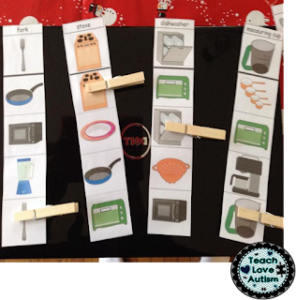
I’m all about simple task box ideas that involve clothespins! They’re so easy to put together, and I use them with task cards all the time. Clothespins are perfect for our students who need a little extra fine motor practice. I have them in all sizes! Right now, I’m using them with clip strips featuring items you’d find in the kitchen. Your students will love clipping the clothespins to the matching picture. It’s a great way for them to work on those fine motor skills while staying engaged.

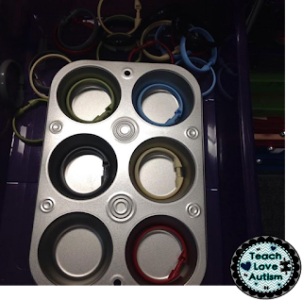
Here’s one of my go-to simple task box ideas that’s fun and practical! All you need is a muffin tin and some colorful shower curtain hooks. Your students follow an example picture to sort the hooks by color into each muffin cup. It’s such an engaging way to work on color recognition and sorting skills. I love how this activity also encourages fine motor control as students pick up each hook and place it in the correct spot. It’s easy to set up, and you can switch things up using different sorting patterns or adding a time challenge to keep it exciting. This task is a hit with my students, and it’s perfect for keeping them focused and building independence!

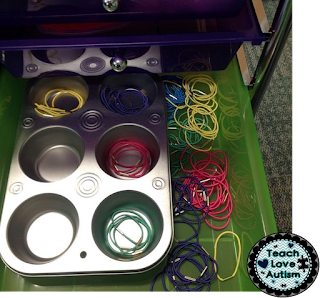
Another one of my favorite simple task box ideas, but this time, with hair ties! Just like the muffin tin task with shower curtain hooks, this one is all about sorting. For this one, your students place colorful hair ties into the muffin tin. It’s such a simple setup, and I love how easy and budget-friendly it is. Plus, hair ties are easy to find and come in many colors. You can easily change it up as needed. This task is perfect for practicing sorting skills, color recognition, and fine motor control. It’s an easy and effective way to keep our students engaged while working on essential skills.

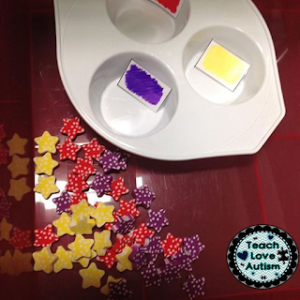
If you can’t tell, I’m a big fan of sorting tasks, so here’s another one of my budget-friendly, simple task box ideas! I found this sorting tray at Dollar Tree and grabbed these fun erasers from the Target dollar spot. This whole task cost me just $2! To make things easier for my students, I included
visuals for which colors go, giving them a little guidance so they can work independently. It’s a great way to build sorting skills while sticking to a budget. The kiddos love using the bright erasers to match up with the visuals. It’s all about finding simple, affordable tools to create engaging tasks!
Grab Your Work Task Starter Kit
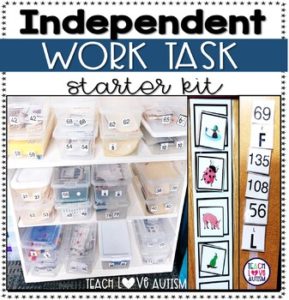
The Independent Work Task Starter Kit is a must for setting up simple task box ideas in your classroom. It gives you a clear system to work from instead of piecing things together on your own. One of the biggest benefits of this kit is the work task labels. They help you clearly label each box by skill area, like numbers, alphabet, shapes, and more. This makes it easier for your students to know which task to grab and helps your team reset or rotate tasks quickly without confusion. The kit also includes visual schedules for 3, 4, 5, or 6 tasks, so you can adjust expectations based on your students’ stamina and independence levels rather than a one-size-fits-all approach.
What really makes this kit effective is how it supports independence beyond just the task boxes themselves. The What’s Inside Each Box pages will help you keep track of what materials belong with each task. This helps your paraprofessionals or substitutes navigate and support the system consistently. The daily work task schedules for your team make it easy to plan rotations across the week and avoid repeating the same tasks too often. Reinforcer boards and choice visuals tie everything together by giving your students a clear “I am working for…” structure. This setup helps independent work stations run smoothly and predictably right from the start.
Additional Resources
Now that you’ve got the basics down, let’s look at some additional resources that can make planning and implementing simple task box ideas even easier! These tools and materials help you streamline your setup, keep your students engaged, and get the most out of your work task boxes. Whether you’re just starting or looking to expand your collection, these resources will give you everything you need to create an effective and engaging work task station.
Increase Student Success With Simple Task Box Ideas
I have to say that using work task boxes has truly been one of the most successful systems in my classroom! It’s amazing to see how well these simple task box ideas keep my students engaged and on track. Knowing that my students are being productive gives me the freedom to work 1:1 with others who need extra support. I love that task boxes offer a great balance of independence and structure, creating a classroom environment where everyone can thrive. Give these ideas a try, and you’ll see how effective they can be in your space!
Save for Later
Remember to save this post to your favorite Special Education Pinterest board so you can easily come back to these simple task box ideas when you’re planning independent work stations or refreshing your work tasks.
Related


One Response
Where did you get the test tubes?