
Picture this. It’s time for small group instruction. The schedule changed again. One student is across the room. One needs the bathroom. One is on the floor and is not getting up. Your para is either wandering or doing the exact same thing you are. Sound familiar?
I’ve been there. And when I looked back at it, the problem wasn’t the students. Those three weren’t grouped by any skill. They just needed something to do at that time of day. And nothing was planned for what actually happened once they got to the table.
That’s the difference between kids sitting at a table together and real small group instruction. One is a seating arrangement. The other is one of the four types of instruction every special education classroom needs.
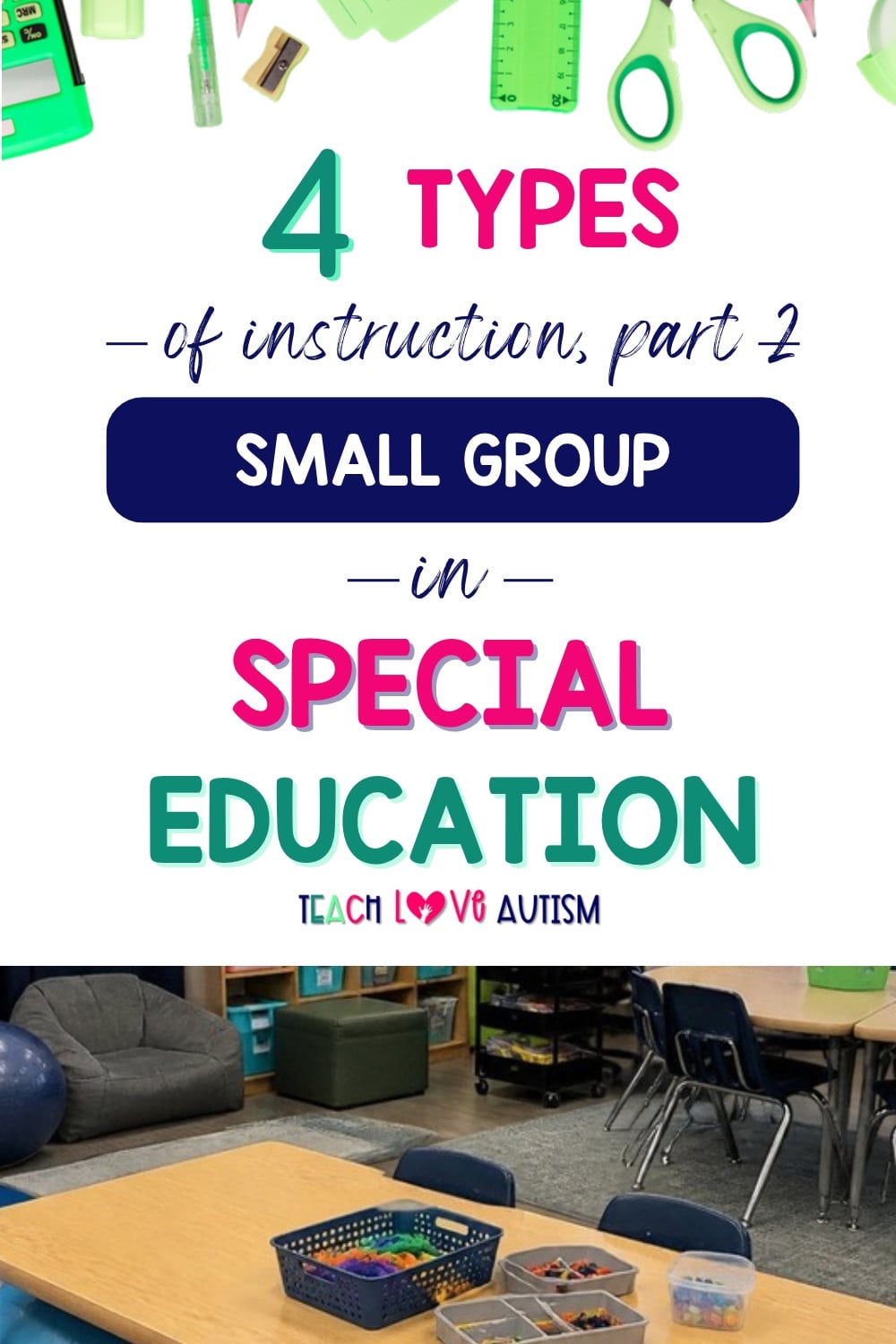
What is small group instruction in special education?
Small group instruction is two to four students working on the same targeted skill with an adult. The key word is targeted. Students land in a group because their data says they need the same thing.
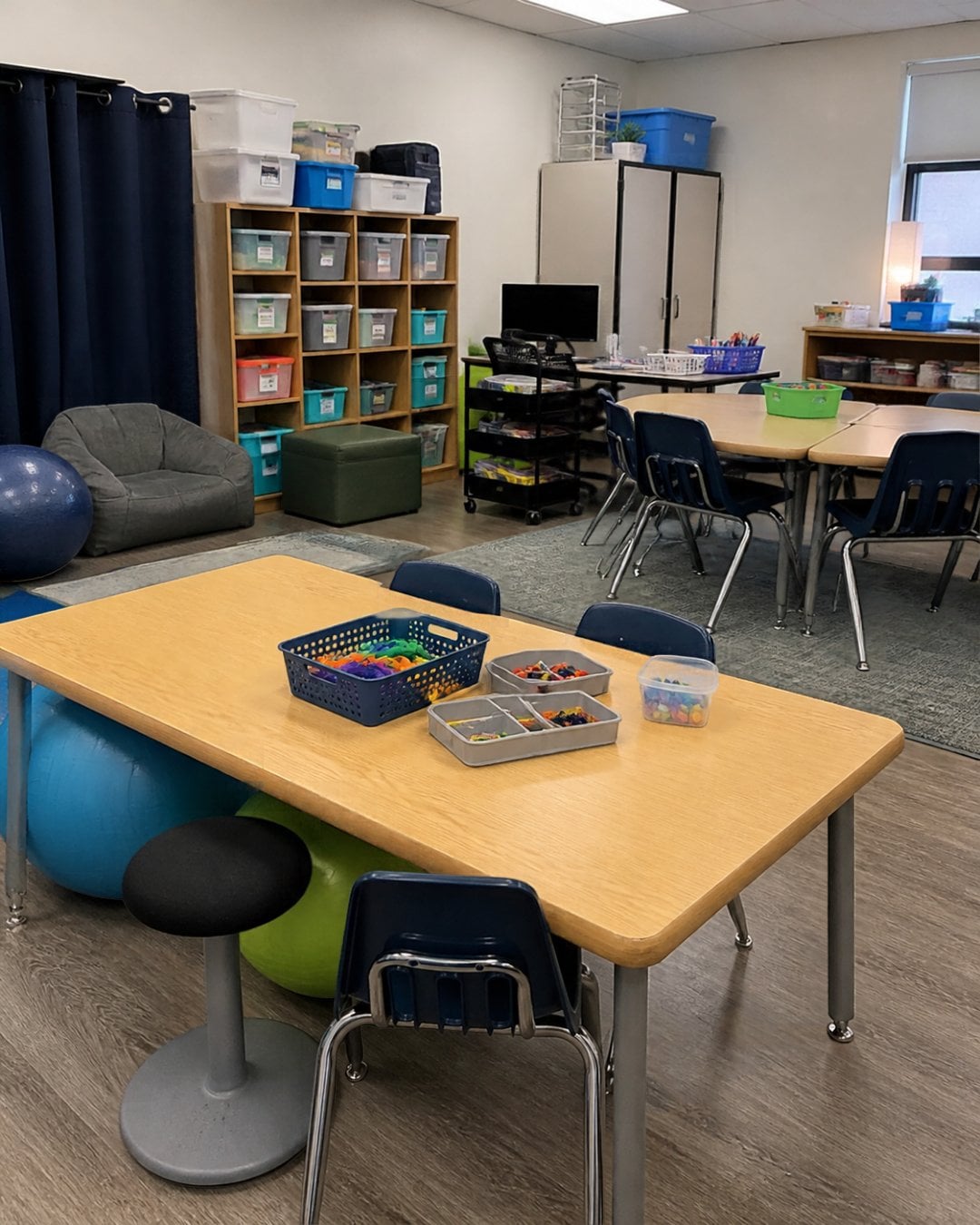
Real talk: sometimes students get grouped together just so one adult can supervise them. That happens in every building. But that’s supervision, not small group instruction.
Who runs it? You or your para.
Why small group instruction matters
- Students work at their level. Whole group has to aim at the middle. Small group can aim right at what these students need.
- More turns. With two to four students, everyone practices more than they ever could in whole group.
- The “we do” and “you do” live here. Small group follows the same I do, we do, you do path as whole group, just with fewer students and more chances to respond.
- Your para gets a real job. A well-planned small group is something a para can run while you run another.
Lots of chances to respond and practice is a core piece of explicit instruction.
What small group instruction is not
- It’s not a holding pen for whoever is free at 10:15.
- It’s not two adults doing the exact same thing at two different tables while a third group waits.
- It’s not where a student meets a skill for the very first time with zero modeling. That’s a recipe for the floor scenario above.
Materials that work for small group instruction
- Worksheets for the “we do” and the “you do.”
- Task cards on an iPad or as a printable, with students taking turns.
- Adapted books for reading and talking about a topic together.
- Reading comprehension passages at the group’s level.
- File folders while students are still learning the skill.
Where small group fits in the four types of instruction
Small group instruction usually comes right after a skill is introduced in whole group. It’s where students practice with support until they’re ready to show what they know 1:1, and eventually do it on their own in independent work. Nothing skips straight to independent work. That’s the teach-first rule from The Four Types of Instruction You Need in Your Special Education Classroom.
Small group resources teachers love
-
 Science of Reading Resource Bundle for Phonics and Reading Comprehension$27.50
-
 Counting Tallies Digital Task Cards | Boom Cards$2.00
-
Product on salePets Reading Visually Comprehension Mini BundleOriginal price was: $15.00.$12.00Current price is: $12.00.
-
Product on saleWH Question Adapted Books for Special Education Set #1Original price was: $32.50.$24.75Current price is: $24.75.


Want more? Browse every small group resource in the shop.
Keep reading
- Working with Paraprofessionals
- Differentiated Instruction Strategies for the Special Education Classroom
- Simplify Data Collection in Special Education
The four types of instruction series
- The Four Types of Instruction You Need in Your Special Education Classroom (start here)
- Part 1: Whole Group Instruction
- Part 3: 1:1 Instruction and IEP Data
- Part 4: Independent Work
Get the four types working in your room

Want a closer look at the materials teachers use across all four types of instruction? Pop your email in and I’ll send it straight to your inbox.
And if you’d rather not build every piece yourself, the Teach Love Resource Membership has materials for all four types, ready to print and use.
Save this post for later! Pin it to your favorite classroom board.