
I’ve seen this in more classrooms than I can count while coaching. 1:1 instruction is on the schedule, but it keeps getting skipped. The teacher or para gets pulled away to handle another problem, or the student just won’t come over to the table. After enough days like that, the teacher gives up on it.
And when 1:1 does happen? It’s the same thing over and over. No data. A stack of worksheets with no real purpose. Bored students, and a bored adult.
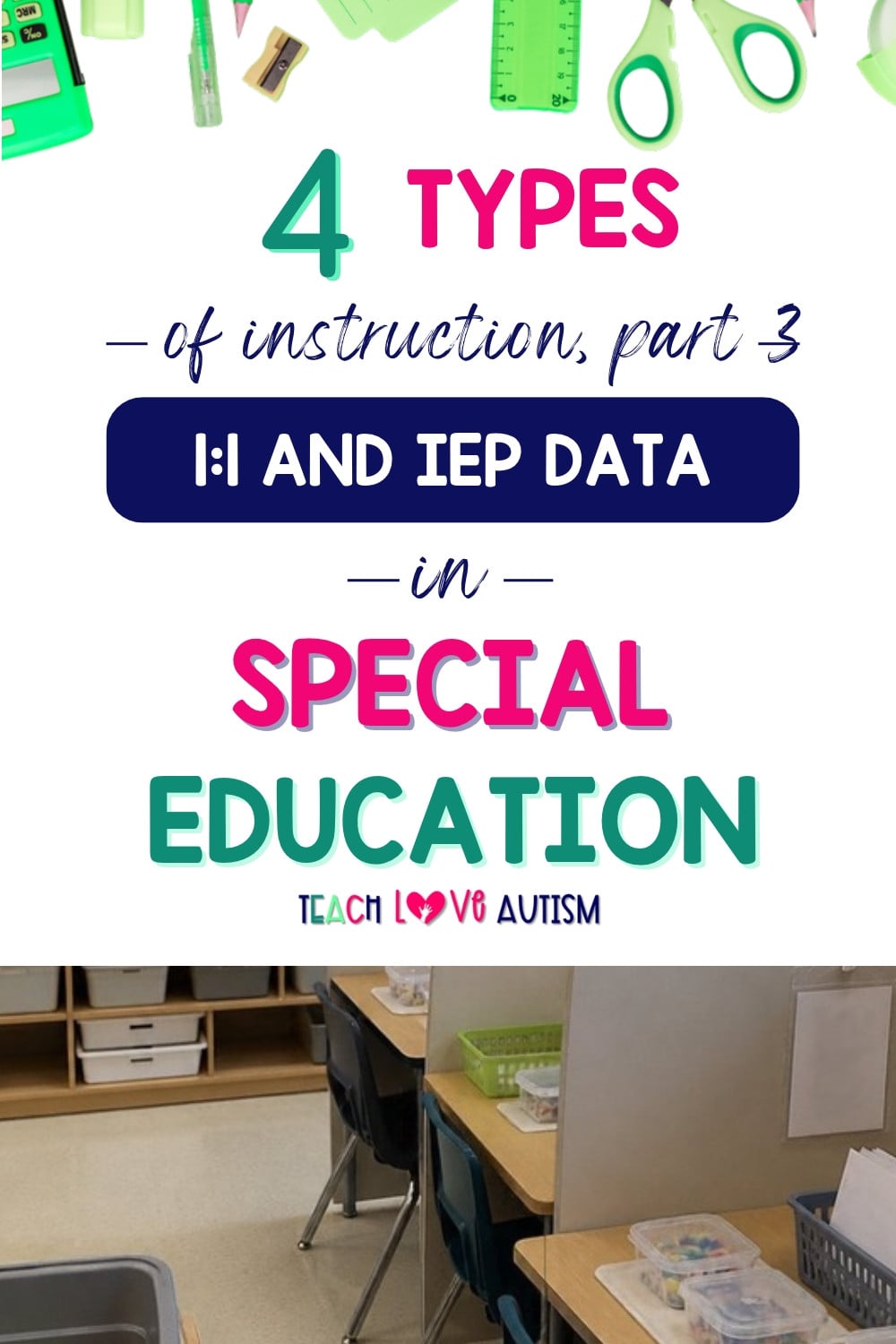
Here’s why that matters so much. 1:1 instruction is where your IEP data comes from. When it falls apart, your progress monitoring falls apart with it. It’s one of the four types of instruction every special education classroom needs, and it’s the one that gets dropped first.
What is 1:1 instruction in special education?
1:1 instruction is one adult working with one student on a skill tied to an IEP goal. It usually looks like one of two things:
- A cold probe. You check the skill without teaching it first, so you know where the student really is.
- Teach, then check. You teach the skill, then the student shows you what they can do while you take data.
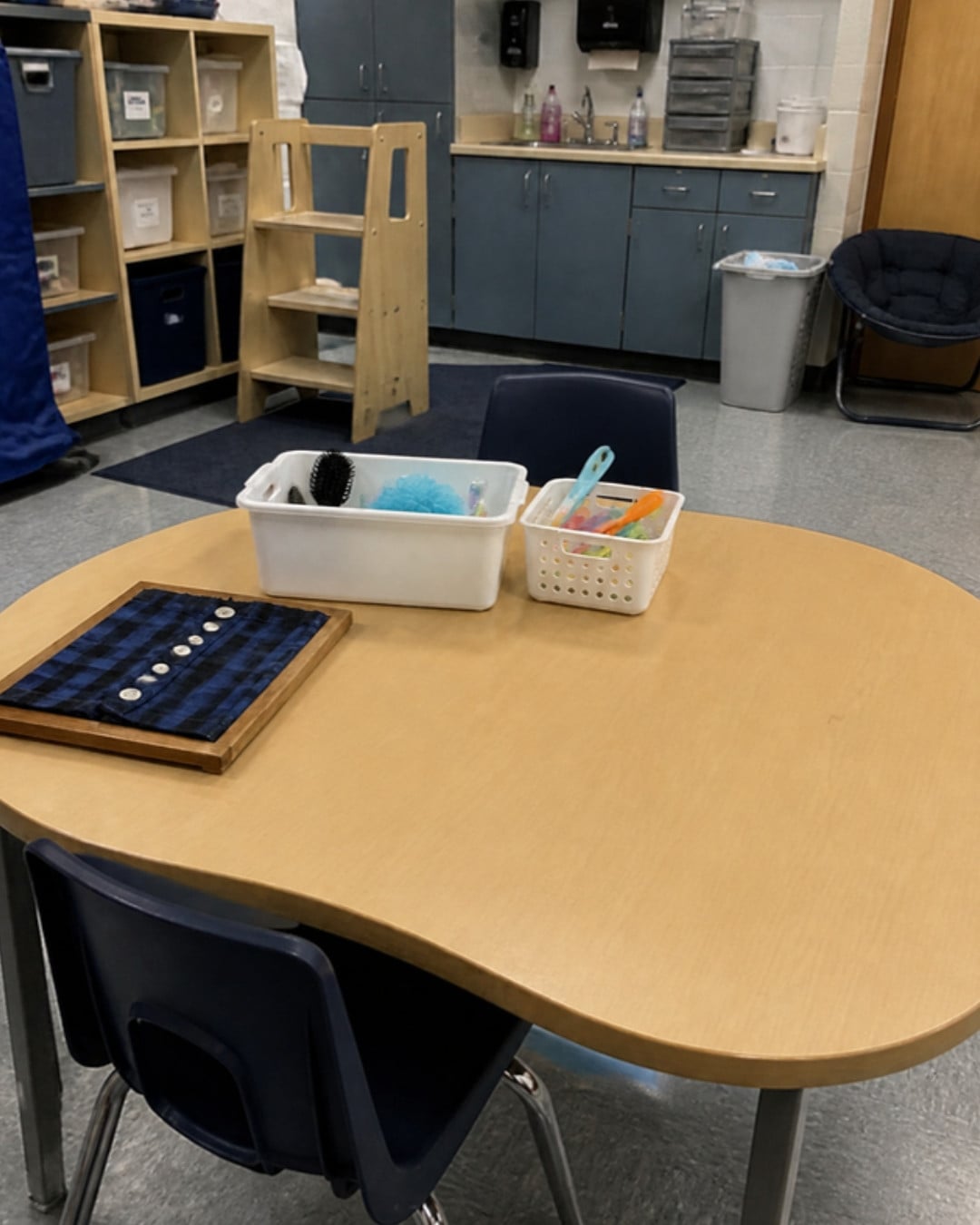
Who runs it? You or your para. That’s why in my shop, this type is labeled “1:1 and IEP Data.” Teachers don’t always connect the two, but they go together.
Why 1:1 instruction matters
- Data you can trust. One adult, one student, one skill. No guessing who answered.
- Progress monitoring. This is the data that shows up in progress reports and IEP meetings.
- It tells you if your teaching worked. Whole group and small group teach the skill. 1:1 shows you whether it stuck.
- It decides what comes next. 1:1 data is how you know a skill is ready to move to independent work, or needs more teaching first.
How high you set the bar for mastery matters too. One study with autistic students found that skills mastered to a higher standard held up better over time.
What 1:1 instruction is not
- It’s not a random worksheet to fill the time slot.
- It’s not the first thing cut when the day gets busy. If 1:1 gets skipped all week, your data for that week doesn’t exist.
- It’s not errorless work, unless a student has an IEP goal for it. Errorless materials are usually below a student’s instructional level, and 1:1 should be right at it.
Materials that work for 1:1 instruction
- File folders often start here, while you collect data on the skill.
- Worksheets tied to a specific IEP goal.
- Task cards for quick data on a targeted skill.
- Adapted books for reading and comprehension goals.
- Social narratives for a student with a specific behavior need, read before the event or even weeks ahead.
Where 1:1 fits in the four types of instruction
1:1 instruction is the checkpoint. Skills get introduced in whole group, practiced in small group, measured in 1:1, and only then move to independent work. That’s the teach-first rule from The Four Types of Instruction You Need in Your Special Education Classroom.
1:1 and IEP data resources teachers love
-
 September Reading File Folders | Fall Activities | Literacy Centers$7.00
-
 Counting One Dollar Bills | Money Worksheets | U.S. Bills$4.25
-
School Reading Comprehension with Visuals for Special Education$3.00
-
Product on saleAnimals Reading Comprehension with Visuals for Special EducationOriginal price was: $15.00.$12.00Current price is: $12.00.


Want more? Browse every 1:1 and IEP data resource in the shop.
Keep reading
- Simplify Data Collection in Special Education
- IEP Best Practices for Self-Contained Special Education
- 8 Tips for Training Paraprofessionals
The four types of instruction series
- The Four Types of Instruction You Need in Your Special Education Classroom (start here)
- Part 1: Whole Group Instruction
- Part 2: Small Group Instruction
- Part 4: Independent Work
Get the four types working in your room

Want a closer look at the materials teachers use across all four types of instruction? Pop your email in and I’ll send it straight to your inbox.
And if you’d rather not build every piece yourself, the Teach Love Resource Membership has materials for all four types, ready to print and use.
Save this post for later! Pin it to your favorite classroom board.