
I’ll never forget the moment it hit me. I was standing in my self-contained classroom, looking around, and I realized none of the four types of instruction in my day were running well. Not whole group. Not small group. Not 1:1. Not independent work. None of it.
So I got to work. I started collecting data on my students and their behavior. I figured out what actually motivated each of them. I built a schedule my team could run without me narrating every minute. I planned for the days a student wouldn’t come to the table. And I held everyone accountable. My students, my staff, and yes, me.
The room ran better. Not perfect. Better. And the thing that made it click was realizing every special education classroom runs on the same four types of instruction. When one of them is missing or shaky, the whole day feels it.
What are the four types of instruction?
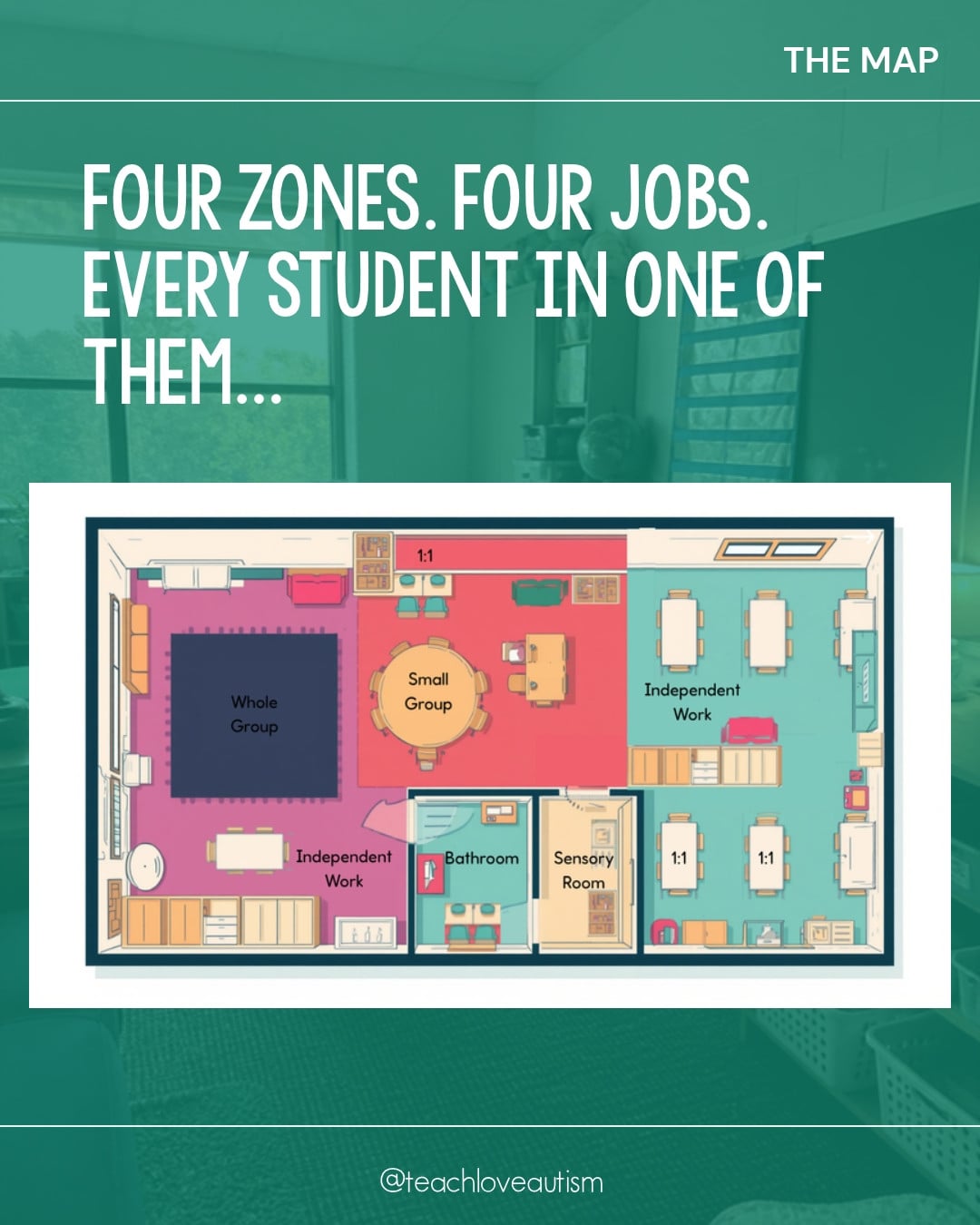
Every student in your room should be in one of the four types of instruction at any point in the day. Here’s what each one is for.
1. Whole group
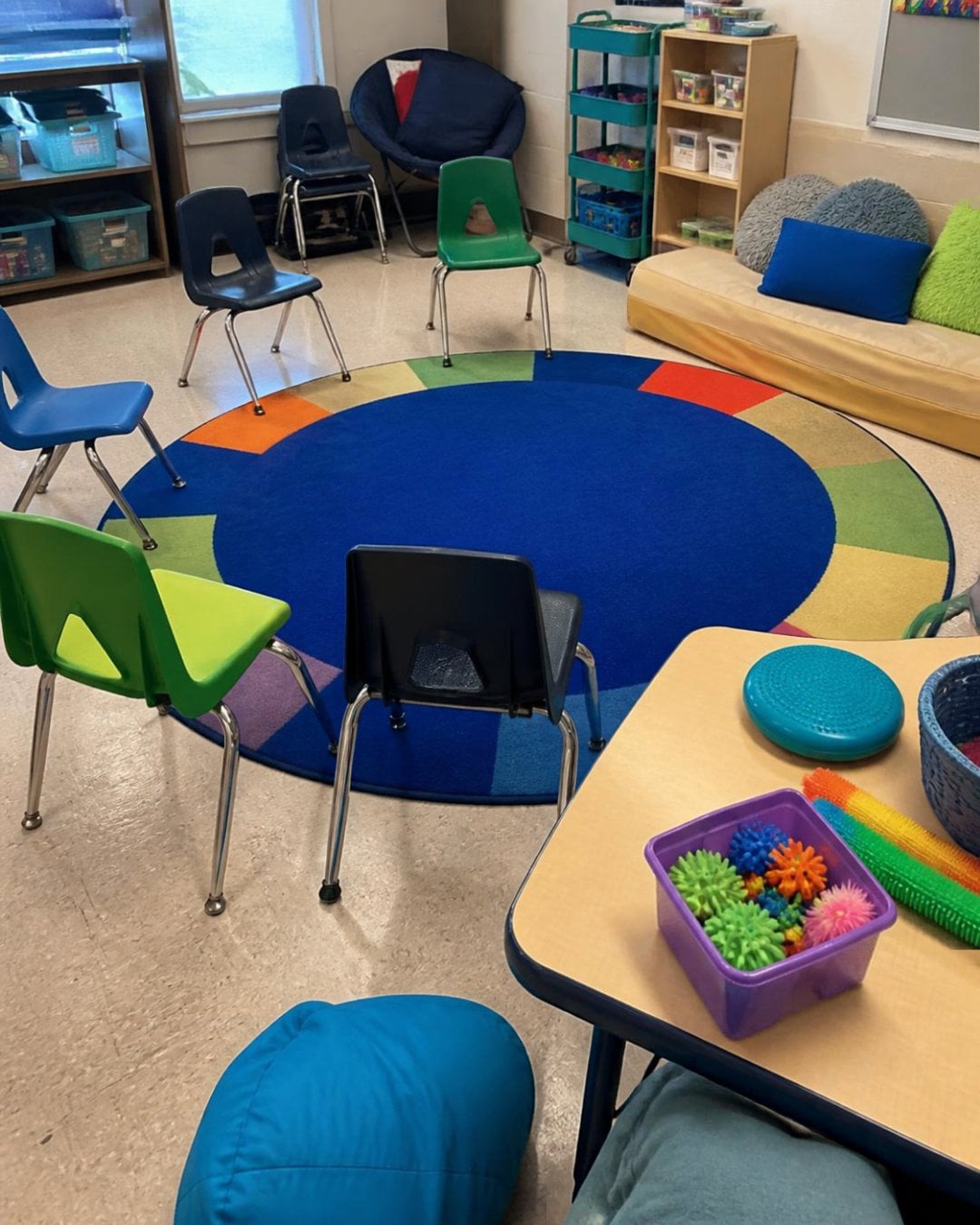
Whole group is for shared routines everyone can join. Morning meeting, calendar, a read-aloud, a social narrative on the smart board. It’s also where you introduce a new topic and model it before anyone tries it on their own. Who runs it? You.
2. Small group
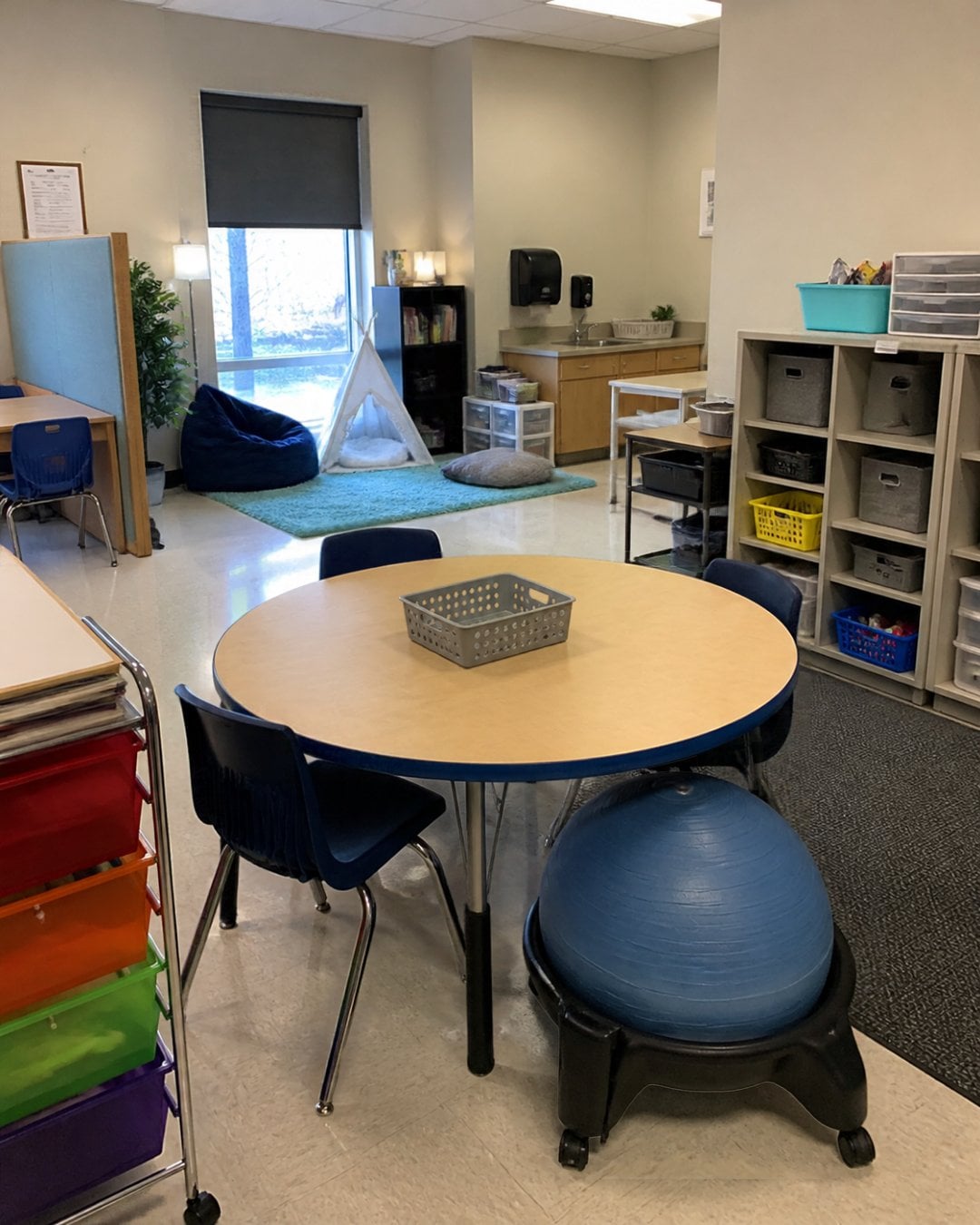
Small group is two to four students working on the same targeted skill. And I mean targeted. Students land in a group because their data says they need the same thing, not because they happened to be free at 10:15. Who runs it? You or your para.
3. 1:1 and IEP data
1:1 is one adult and one student, working on a skill tied to an IEP goal. This is where you get data you can actually trust, the kind you’d feel good handing to a parent at an IEP meeting. Who runs it? You or your para.
4. Independent work
Independent work is for skills a student has already mastered. Task boxes, binders, file folders they finish with no adult prompting at all. Who runs it? Nobody. And that’s the point. It frees you up to run the other three at the same time.
The rule I won’t budge on: teach it first
Nothing goes into independent work until it’s been taught in whole group, small group, or 1:1. Nothing. It’s the rule that holds the four types of instruction together.
I’ve walked into a lot of classrooms and seen a student handed a task box for a skill nobody ever taught them. That’s not independent work. That’s a guessing game with a lid on it. And then we wonder why the student is upset, the para is hovering, and the “independent” station needs three adults.
One exception worth knowing about: errorless work. Errorless materials are built so a student can’t get it wrong, which makes them great for building work stamina and success. They still get shown first. In a self-contained room, that usually means showing the routine more than once. But they live in independent work, not in your teaching time.
How a skill moves through the four types of instruction
Here’s the part that changed how I planned. The four types of instruction aren’t four separate boxes. They’re a path a skill travels.
- It starts in a group. You model it (I do), practice it together (we do), and let students try it (you do).
- It gets measured 1:1. If a student has an IEP goal on that skill, 1:1 is where you take the data.
- It ends up independent. Once your data shows a student can do it on their own, again and again, with no prompts, it moves to independent work.
How do you know when a student is really ready to move? That’s a bigger conversation than one blog post. But I promise it’s not a gut feeling. It’s data. Research with autistic students backs this up, too. Skills taught to a higher mastery bar tend to stick around longer (Fuller and Fienup, 2018).
Same material, different type
This is one of my favorite things to show teachers. You don’t need a separate pile of materials for each of the four types of instruction. The same resource can live in more than one place.
- Worksheets can be a whole group exit ticket, small group practice, or 1:1 data.
- Task cards work for all four. The digital version goes on the smart board for whole group, the printable gets passed around a small group, you take data with them 1:1, and once a skill is mastered they go in an independent work bin.
- File folders usually start in 1:1 and move to independent work once a student finishes them with no prompting.
- Adapted books are great for kicking off a new topic in whole group, and they fit small group, 1:1, and an adapted book center too.
- Social narratives shine in whole group as part of your daily routine, and in 1:1 for a student who needs to read one before a big event.
Resources for each of the four types
If you’re filling gaps in your day, here are a few teacher favorites for each type.
Whole group
-
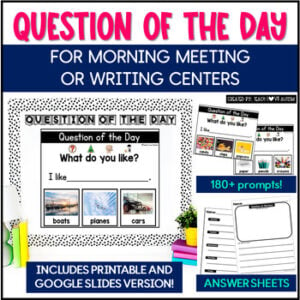
 Daily Question of the Day | Morning Meeting Bulletin Board for Special Education$9.50
-
Product on saleMorning Meeting | Calendar Time | Circle Time | Bundle for Special EducationOriginal price was: $37.50.$22.75Current price is: $22.75.

Small group
-
Science of Reading Resource Bundle for Phonics and Reading Comprehension$27.50
-
Product on saleWH Question Adapted Books for Special Education Set #1Original price was: $32.50.$24.75Current price is: $24.75.


1:1 and IEP data


Independent work


Want to see everything? Browse the shop by type: Whole Group | Small Group | 1:1 and IEP Data | Independent Work
Making the four types work together
The four types of instruction only run smoothly when your schedule and your staff are set up for them. If that’s where you’re stuck, start here:
- Creating a Special Education Classroom Schedule
- Working with Paraprofessionals
- Simplify Data Collection in Special Education
- Getting Started with Independent Work Tasks
[JENN: links to the 4 single-type posts go here as each one publishes]
Get the four types working in your room

Want a closer look at the materials teachers use across all four types of instruction? Pop your email in and I’ll send it straight to your inbox.
And if you’d rather not build every piece yourself, the Teach Love Resource Membership has materials for all four types, ready to print and use.
Save this post for later! Pin it to your favorite classroom board.