


Walking into your classroom for the first time as one of many first-year special education teachers, you expect to spend your days planning lessons, writing IEPs, collecting data, and building relationships with your students. Then you realize you’re also leading a team of paraprofessionals. Suddenly, you’re not only figuring out your own routines. You’re also helping other adults understand your expectations, instructional style, and classroom procedures. It can feel intimidating, especially if your paraprofessionals have been in the classroom longer than you have. The good news is that you don’t have to know everything on day one. By establishing clear systems and open communication from the beginning, you can build a collaborative team that helps your students thrive.
Why Working with Paraprofessionals Feels Different

Most teacher preparation programs do an excellent job preparing us to write lesson plans, differentiate instruction, and understand special education law. What they often overlook is how to effectively collaborate with the paraprofessionals who will be working alongside you every day. You will be responsible for communicating expectations, coordinating schedules, answering questions, and ensuring that everyone provides consistent support for your students.
If that responsibility feels overwhelming, you’re not alone. Nearly all first-year special education teachers experience a learning curve when leading a classroom team. Let’s take a look at five common challenges first-year special education teachers face when working with paraprofessionals, along with strategies to help you navigate each one with confidence.
Challenge #1: First-Year Special Education Teachers Need to Define Roles and Responsibilities from Day One
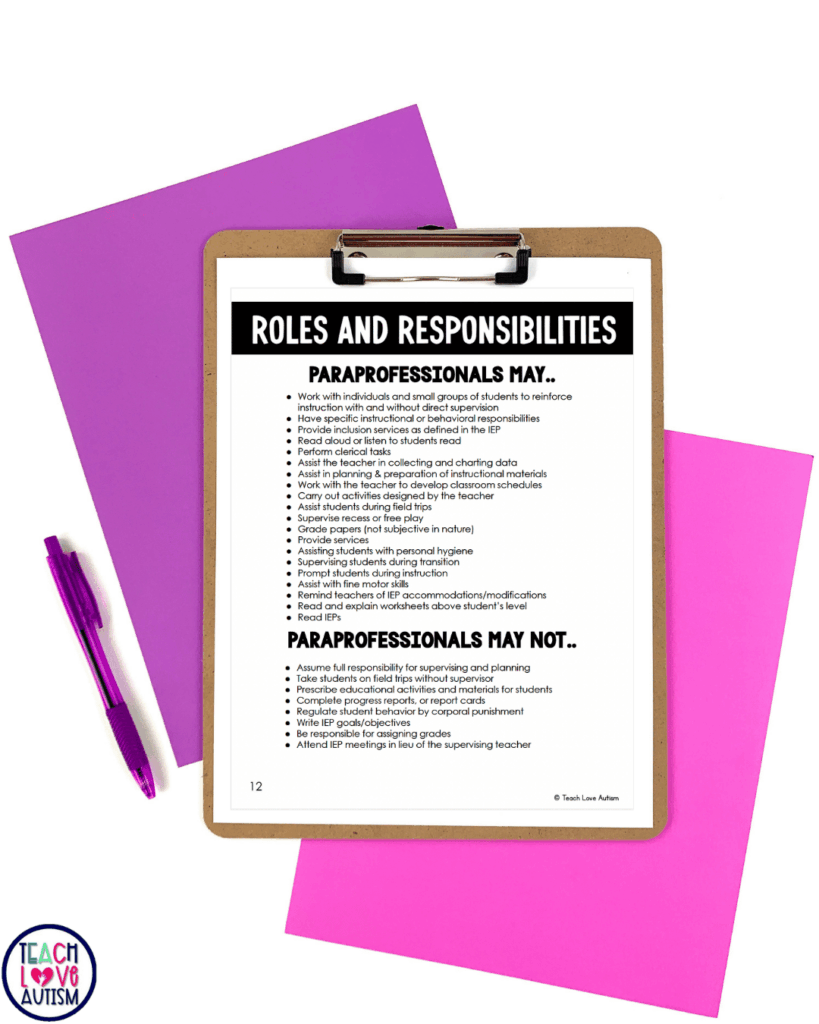
One of the biggest mistakes first-year special education teachers make is assuming everyone already knows what to do. Even if your paraprofessionals have years of experience, every classroom operates differently. One of you may expect paraprofessionals to lead small groups. Another of you prefers that they circulate and provide individual support. Some classrooms use specific prompting strategies or behavior systems that differ from previous assignments. Taking time to explain how your classroom functions helps everyone begin the year with the same expectations.
Instead of giving broad directions like “Can you help during math?” try giving specific responsibilities. For example, you might explain, “During math, I’d like you to work with Group B on independent practice. Give students time to solve problems on their own before offering a verbal prompt. If someone gets stuck after trying, then use the visual example on the table.” That level of detail helps your paraprofessionals understand not only what they’re doing but also how you want instruction to look.
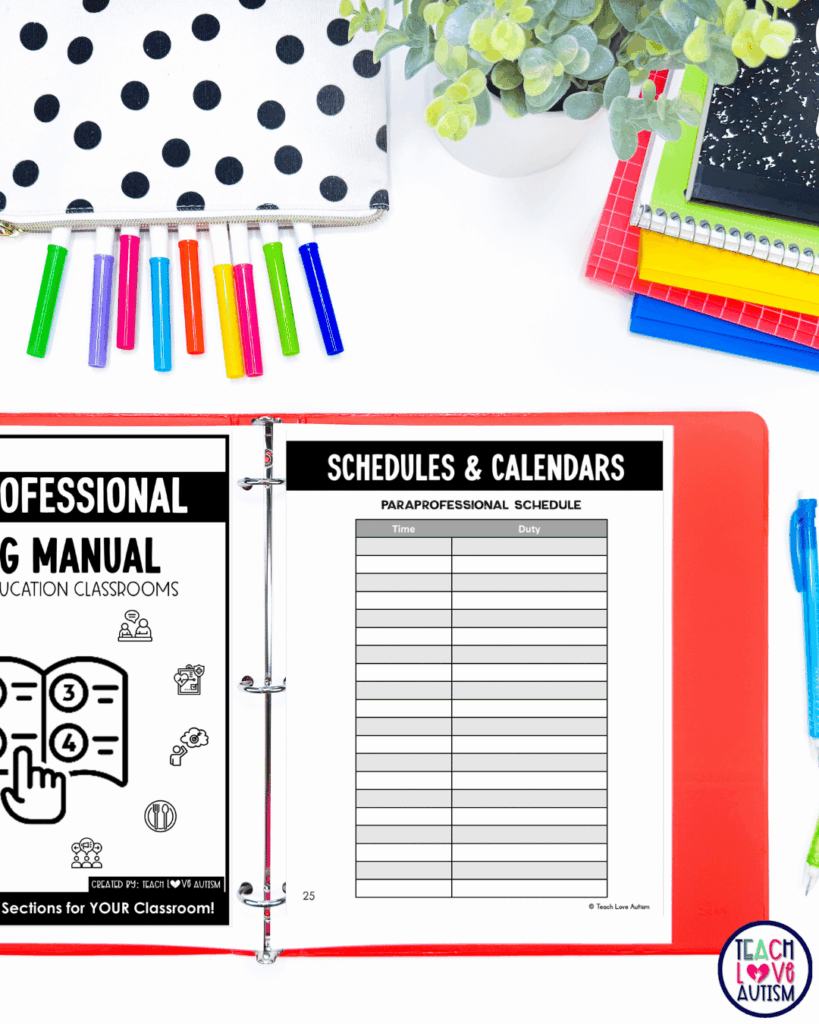
One of the easiest ways to make these expectations clear is by creating a central place where your team can find important information. Provide your paraprofessionals with written schedules, classroom procedures, instructional expectations, and student support information to reference as needed. I designed my Paraprofessional Binder and Training Manual for exactly this purpose. It gives your team one organized location for roles and responsibilities, daily schedules, instructional guides, student information, and other resources, so everyone begins each day knowing what success looks like. Everyone feels more confident and motivated when they are aware of everything going on.
Challenge #2: Building Confidence as the Classroom Leader

Many first-year special education teachers quietly wonder, “How am I supposed to lead adults who have been doing this longer than I have?” It’s a completely normal concern. Some paraprofessionals may have spent years supporting students in special education classrooms, while you’re still learning school procedures yourself. But experience doesn’t determine who provides instructional direction. As the classroom teacher, you’re responsible for ensuring your students receive consistent instruction and services aligned with their IEPs.
Leading doesn’t mean having all the answers or acting like the expert every moment of the day. Strong leadership is built on clarity, respect, and collaboration. One simple routine that works well is holding a quick morning huddle before your students arrive. Spend a few minutes reviewing the day’s schedule and highlighting any changes. Make sure to identify your students who may need additional support, and answer questions before instruction begins. These short conversations eliminate confusion before it can affect your day.
At the same time, remember that your paraprofessionals bring valuable observations to the table. They often notice your students’ successes, struggles, or behavior patterns while working alongside them throughout the day. Invite their input by asking questions such as, “Did you notice anything that helped Ethan stay focused today?” or “How did small group reading go this morning?” Listening to their perspective builds trust while reinforcing that instructional decisions are still guided by you. Leading with clarity instead of authority creates a classroom culture where everyone feels respected and works toward the same goals.
Challenge #3: Creating Consistency for Students

Our students thrive when the adults around them respond in consistent ways. That is especially true for our students with disabilities who rely on predictable routines, clear expectations, and familiar support strategies throughout the day. Even when every paraprofessional has the best intentions, small differences in how adults prompt, redirect, or reinforce behaviors can send mixed messages to our students. As first-year special education teachers, one of our most important responsibilities is helping our classroom team provide consistent support from the moment our students walk through the door.
One area where consistency makes a difference is prompting. Imagine you have a student learning to complete a morning routine independently. One paraprofessional patiently waits, allowing the student time to think before offering a verbal reminder. Another immediately points to the next step. Someone else completes part of the task for the student to help the morning move more quickly. Although each adult is trying to be helpful, your student receives three different levels of support.
Taking time to explain your prompting hierarchy, appropriate wait time, and model what each level of assistance looks like helps everyone encourage independence in the same way. The same principle applies to behavior management, transitions, reinforcement systems, and classroom expectations. When our students know every adult will respond consistently, they feel more confident and secure throughout the school day.
Challenge #4: Learning to Trust Your Team
One of the biggest lessons many first-year special education teachers learn is that they simply can’t do everything themselves. It’s easy to fall into the habit of answering every student question, preparing every activity, collecting every piece of data, and solving every problem. That’s mainly because you feel pressure to make sure everything is done correctly. While those instincts come from a genuine desire to support your students, trying to carry every responsibility yourself often leads to stress and burnout.
Learning to trust your paraprofessionals doesn’t happen overnight, and that’s okay. As your team becomes familiar with your classroom routines and expectations, begin delegating responsibilities so everyone can contribute to the day’s success. One paraprofessional might prepare materials for an upcoming lesson. Another oversees a small group activity you’ve already modeled. Someone else may collect data during a reading lesson or monitor independent work while you provide direct instruction. Delegating responsibilities doesn’t mean you’re giving up your role as the teacher. You’re allowing every member of the classroom team to use their strengths so your students receive the support they need.
Resources like my Paraprofessional Binder and Training Manual can also make delegating responsibilities feel much less overwhelming. When your classroom team has a trusted reference to guide daily routines and expectations, you’ll spend less time answering the same questions and more time focusing on instruction.
Challenge #5: Setting Professional Expectations

One conversation I encourage all first-year special education teachers to have early in the school year focuses on professionalism and confidentiality. While many of our paraprofessionals already understand the importance of protecting student privacy, it’s never a bad idea to review those expectations together. Families trust us with personal information so we can provide the best possible support for their children. Taking time to establish professional expectations from the very beginning helps protect that trust and reminds everyone that every decision we make should put our students first.
As you review classroom expectations, explain that student information should only be discussed with staff members who have a legitimate educational need to know. Conversations about your students shouldn’t happen in hallways, the staff lounge, or other public areas where families, visitors, or even other students may overhear. If a paraprofessional has concerns about a student, encourage them to bring those questions directly to you rather than discussing them with others. Setting these expectations proactively helps prevent misunderstandings and creates a culture of professionalism within your classroom team.
Including confidentiality and professionalism in your paraprofessional training materials helps reinforce these expectations and gives your team a shared understanding of how student information should be handled. It reminds everyone that every student deserves to be treated with dignity, respect, and confidentiality. When your classroom team shares that commitment, you’re creating an environment where your students feel safe, families feel confident, and everyone can focus on helping children learn and grow.
Your Classroom Team Will Grow Stronger Every Day
Working with paraprofessionals is a skill that develops over time, just like lesson planning, behavior management, and writing IEPs. As one of many first-year special education teachers, you’re learning how to teach your students while also learning how to lead a team of professionals who share the same goal. Give yourself permission to grow through that process. Not every routine will be perfect the first week. Not every system will work exactly the way you envisioned. That’s a normal part of building a successful classroom.
The most effective special education classrooms aren’t built because one person does everything alone. They’re built through collaboration, respect, clear expectations, and a shared commitment to helping every student succeed. As you continue developing those relationships with your paraprofessionals, you’ll find that your confidence grows alongside theirs. The systems you intentionally put into place will become second nature.
Resources to Explore as First-Year Special Education Teachers
If you’re one of the many first-year special education teachers preparing to work with paraprofessionals, remember that you don’t have to create every system from scratch. My editable Paraprofessional Binder and Training Manual will help you establish clear expectations, organize your classroom team, and create consistent routines that support both your staff and your students. Instead of spending your first weeks constantly answering the same questions or trying to remember every detail yourself, you’ll have a practical resource that helps everyone begin the year with confidence.
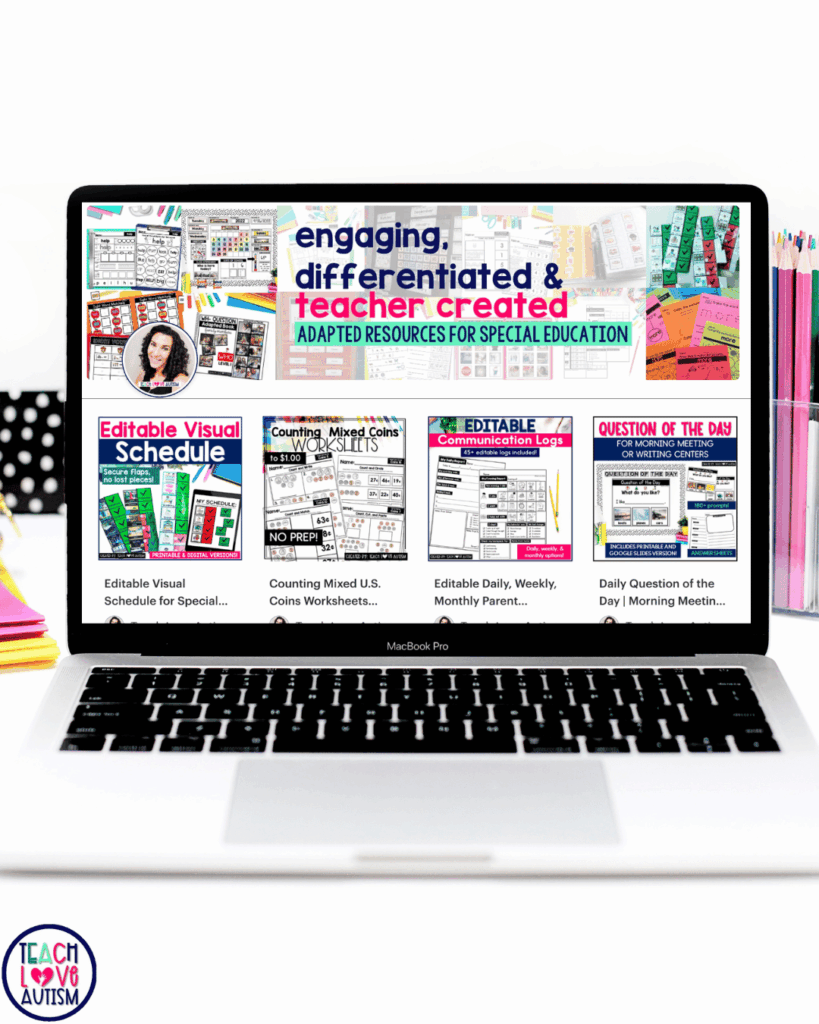
If you’re looking for even more support, I also invite you to explore the rest of my collection of resources in my store. You’ll find classroom management tools, instructional resources, organizational supports, and other special education materials designed to help you save time on planning while creating a classroom where your students can thrive. Whether you’re preparing for your very first year or adding new systems to an established classroom, I hope you’ll find resources that make your job a little easier and your days a little smoother.
Save This for Later
Working with paraprofessionals is a topic you’ll revisit throughout your teaching career. Save this post to your favorite Special Education or classroom management Pinterest board so you’ll have these strategies ready whenever you need a refresher or are preparing for a new school year. It can also be a helpful resource to share with fellow first-year special education teachers as they build their own classroom teams.