
I was so proud of myself. I’d set up a brand new three-step independent task, and I just knew my student was ready for independent work. Then I turned around, and one of my students had a glue stick in their mouth.
Funny now. Less funny then. But it’s a good reminder that a task isn’t independent just because it’s sitting in the independent work area. The real question is whether the student is ready for independent work with that task yet.
Independent work is one of the four types of instruction every special education classroom needs. It’s also the one that gets set up first and taught last, which is exactly backwards.
What is independent work in special education?
Independent work is for skills a student has already mastered. They finish the task with no support and no prompting from an adult. Task boxes, independent work binders, file folders, and puzzles all fit here.
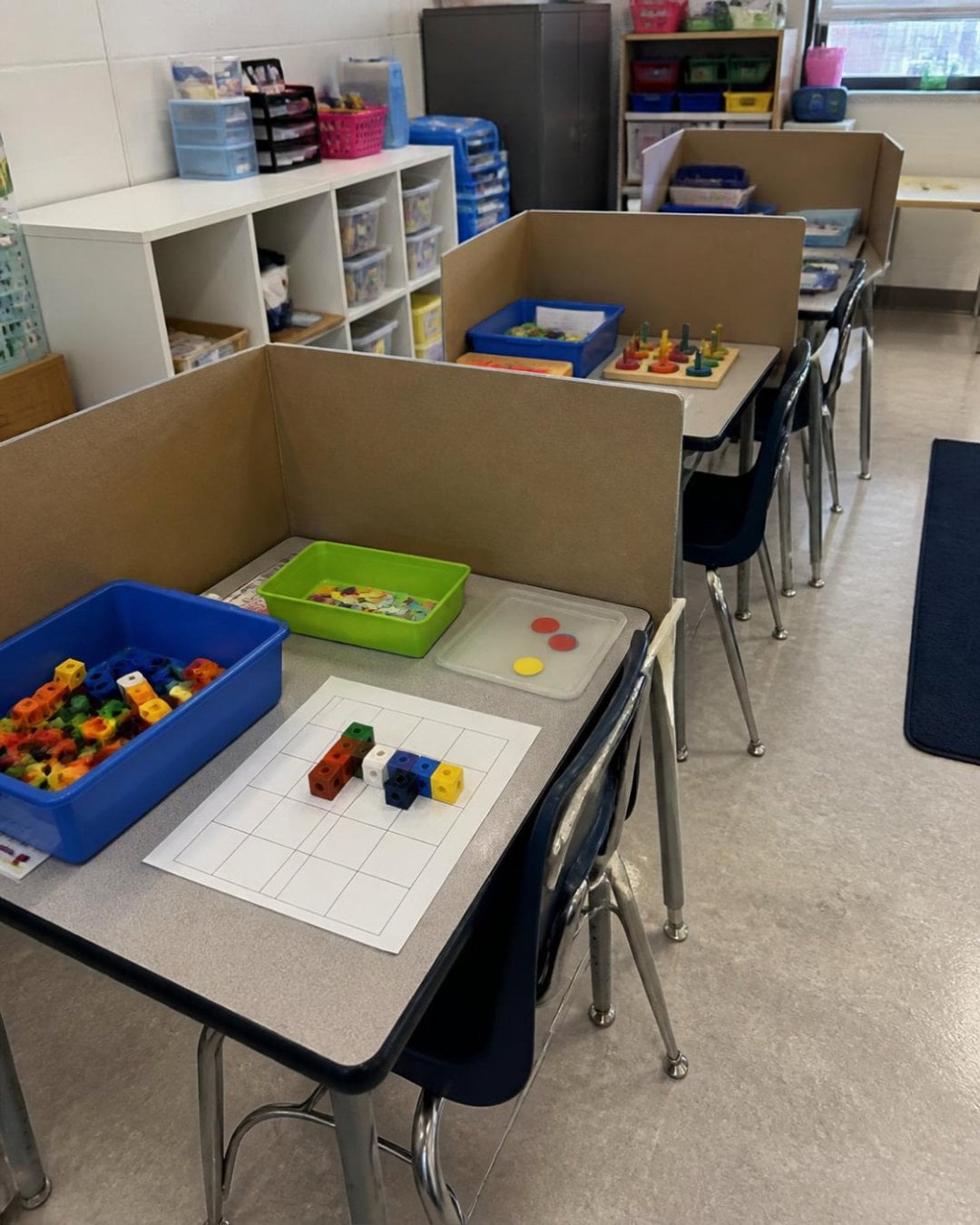
Who runs it? Nobody. And that’s the point. When independent work is solid, it frees up the adults in the room to run the other three types at the same time.
How do you know a student is ready for independent work?
A student is ready for independent work with a task when all three of these are true:
- It’s been taught. The skill was taught in whole group, small group, or 1:1 first. Nothing skips that step.
- Your data says so. Not a gut feeling. Your data shows the student doing it on their own, again and again.
- No prompts needed. Not a nudge, not a point, not an adult hovering nearby.
Exactly where to set the bar for being ready for independent work is a bigger conversation than one blog post. But if you can’t point to the data, the student isn’t ready yet.
This idea isn’t new. Structured teaching built work systems around students finishing tasks without adult prompts.
Why independent work matters
- Independence. Finishing work without an adult is a skill our students need long after they leave our rooms.
- Practice that sticks. Mastered skills stay sharp when students keep using them.
- It makes the rest of your day possible. You can’t run small group and 1:1 if every other student needs an adult.
What independent work is not
- It’s not where new skills get taught. If a student has never seen the skill, they’re not ready for independent work with it. It’s a guessing game with a lid on it.
- It’s not busy work to keep students quiet.
- It’s not a place to dump errorless materials and walk away. Errorless work does belong here, for students who need success and work stamina more than new content. It still gets shown first, usually more than once.
Materials that work for independent work
- File folders once a student can finish them with no prompting.
- Task cards in a bin, once the skill is mastered.
- Independent work binders for practice that builds work stamina.
- Puzzles and errorless tasks.
- An adapted book center with books students already know.
Where independent work fits in the four types of instruction
Independent work is the last stop, not the first. A skill gets introduced in whole group, practiced in small group, measured in 1:1, and only once the student is ready for independent work does it land here. That’s the teach-first rule from The Four Types of Instruction You Need in Your Special Education Classroom.
Independent work resources teachers love
-
Product on sale
 Calendar Independent Work Binder BUNDLEOriginal price was: $12.00.$10.80Current price is: $10.80.
-
Product on sale
 Money Independent Work Binder Coin and Bill BUNDLEOriginal price was: $8.00.$6.40Current price is: $6.40.
-
Food Independent Work Binder$0.00
-
Independent Work Task Starter Kit for Special Education$7.25


Want more? Browse every independent work resource in the shop.
Keep reading
- Getting Started with Independent Work Tasks
- 5 Steps to Launch Independent Work Task Stations
- Independent Work Binder Setup in Special Education
- The Ultimate Guide to Setting Up Independent Work Stations
The four types of instruction series
- The Four Types of Instruction You Need in Your Special Education Classroom (start here)
- Part 1: Whole Group Instruction
- Part 2: Small Group Instruction
- Part 3: 1:1 Instruction and IEP Data
Get the four types working in your room

Want a closer look at the materials teachers use across all four types of instruction? Pop your email in and I’ll send it straight to your inbox.
And if you’d rather not build every piece yourself, the Teach Love Resource Membership has materials for all four types, ready to print and use.
Save this post for later! Pin it to your favorite classroom board.