


Creating a sensory room has been one of the most rewarding additions to my classroom! It’s not just a space but a haven for our students who need extra support regulating their emotions, calming their bodies, or simply finding a moment to decompress. I’ve pulled together ideas and inspiration from my OT team, a fabulous student teacher OT, and even a few of my own favorite finds to make this room truly unique. Whether you’re just starting to plan your sensory room or looking to build on what you’ve already got, I’m sharing with you practical tips, budget-friendly hacks, and a glimpse into how each item supports my students.
Why Creating a Sensory Room Is a Game-Changer
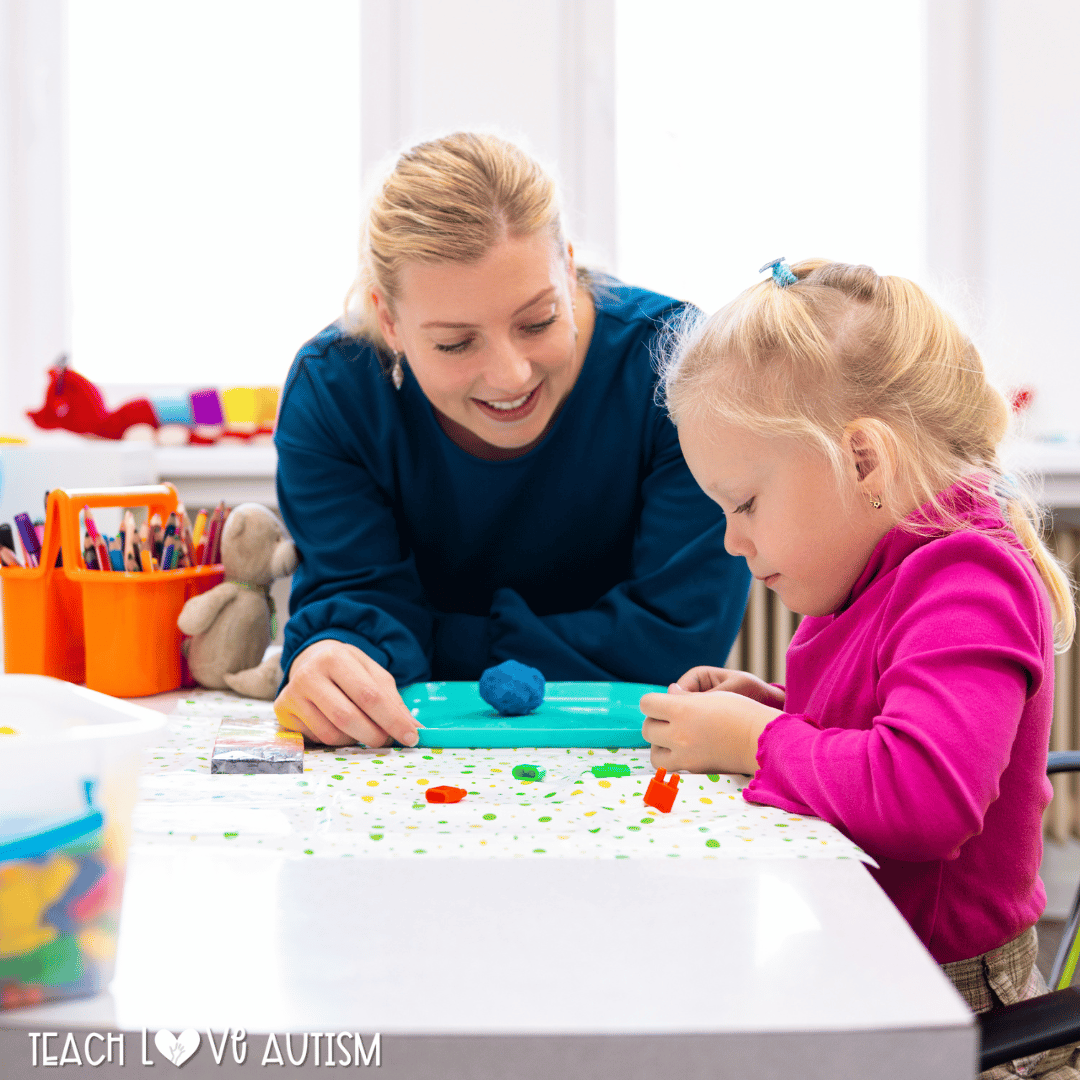
Creating a sensory room is essential because it gives our students a safe place to work through their sensory needs. These spaces are designed to help with self-regulation. The space provides an outlet for our students to calm down, refocus, or recharge when they’re feeling overwhelmed. By meeting sensory needs, they can reduce anxiety and frustration and create a space where our students feel emotionally supported and secure.
A sensory room also encourages exploration and engagement. It offers our students opportunities to interact with different textures, motions, and sensory inputs. When they have a chance to work through these sensory experiences, they often find it easier to return to class with improved focus and attention.
What I love most about sensory rooms is how they encourage independence. Over time, our students begin to recognize their own sensory needs and learn how to manage them. These skills will serve them well both in and out of the classroom, making a sensory room not just a place for immediate relief but a tool for lifelong growth.
The Fidget Table
One of the student favorites I keep in mind when creating a sensory room is the “fidget table.” This is a dedicated spot where my students can engage with items that encourage movement, tactile exploration, and calming sensory input.
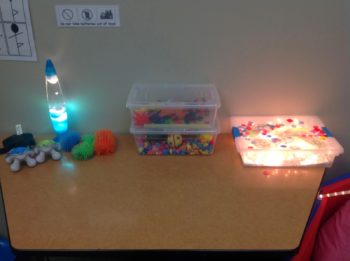
Here’s what you’ll find on the fidget table:
- A mini pillow pet (mine glows different colors when pressed!)
- Squish balls with or without lights (Dollar stores and the Target Dollar Spot are my go-to for these).
- Frog massagers that glow and vibrate (Aldi for the win at only $5).
- A lava lamp (super affordable from Five Below).
- Bins filled with small sensory treasures and a homemade light box.
The light box is a student favorite! It’s just a Tupperware container with Christmas lights inside! My student teacher OT came up with this gem. Students love using glow-in-the-dark stars and transparent chips on top to mix and match colors in the dark.
A closer look at the fidget table shows the variety that makes it so effective. My students gravitate toward the glowing pillow pet, colorful squish balls, frog massagers, and the calming glow of the lava lamp. Each item has its own way of helping students focus or relax, making it an essential piece of the room.
Include a Tactile Wall When Creating a Sensory Room
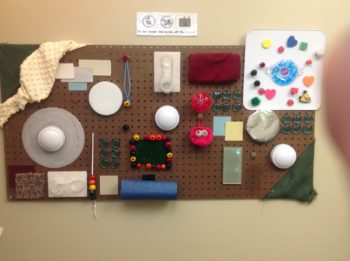
One of the most engaging parts of my sensory room is the tactile wall. My OT provided the tactile letters, which are fantastic for encouraging exploration and discussion about textures. You can grab similar ones at stores like Lakeshore.
The highlight, though, is the tactile board. This masterpiece, created by my student teacher OT, is a pegboard covered in all kinds of textures. Think slinkies, zippers, push lights, magnet boards, felt grass, tile samples, and different fabrics. It’s a goldmine for sensory input and student engagement. She pieced it together using items from Lowe’s and other budget-friendly finds!
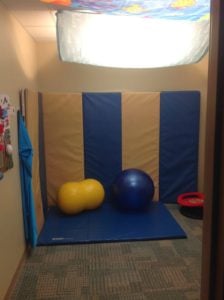
Crash Pit Provides a Spot for Movement in the Sensory Room
The crash pit is where my students can burn off extra energy in the sensory room while building balance and coordination. It includes mats, exercise balls, and even a giant body sock. My students love spinning, balancing, and crashing here.
To keep the space calming, I’ve added shower curtains over the lights. One has an ocean theme, and the other lists synonyms for “relaxation.” It’s amazing how much this subtle lighting shift transforms the mood of the room!
Vestibular Area for Big Movement in the Sensory Room
For students who benefit from movement-based activities, the vestibular area is perfect. It includes:

- Handprints on the wall for push-ups.
- Simple position cards for using mats or the body sock.
- An Angry Bird picture for a student who loves playing wall ball.
- A spin disc (an upgraded sit-and-spin my OT found at School Specialty).
- A Bilbo seat, a secondhand gem I snagged for $5.
These items allow our students to move their bodies in ways that help them self-regulate, all while keeping them engaged and active.
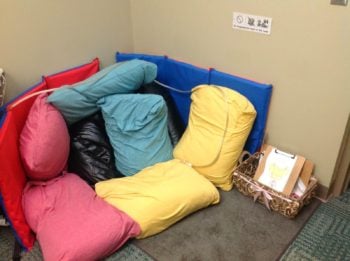
Cozy Corner is a Must When Creating a Sensory Room
When creating a sensory room, make sure to plan a spot for a cozy corner, and mine is always in demand. This area includes mats, pillows, a bean bag, and rope lights for dim lighting. One of my students even has a basket where she loves curling up to draw. Let me tell you, her artwork is so impressive that it’s hard not to let her draw all day!
Designing the Perfect Sensory Room

Creating a sensory room that truly supports your students is all about balancing movement, tactile experiences, and calm, cozy spaces. It’s important to thoughtfully select and arrange them to create a meaningful and supportive environment. My sensory room has become a space where my students feel safe, comfortable, and ready to thrive. Seeing their growth and joy has been incredibly rewarding.
I hope these ideas inspire you while creating a sensory room. Even small changes can have a big impact, so don’t feel like it all needs to happen at once. Over time, your sensory room can grow and adapt to meet the changing needs of your students.
Additional Resources
If you’re ready for more tips for creating a sensory room to support the sensory needs of your students then I’ve got you covered. Check out the blog posts below for more great tips and ideas you can use in your classroom.

Save for Later
Remember to save this post to your favorite special education Pinterest board for quick access to these tips and ideas for creating a sensory room!

One Response
The article submitted was very informative as
well as useful. You people are doing an incredible job.
Keep posting.