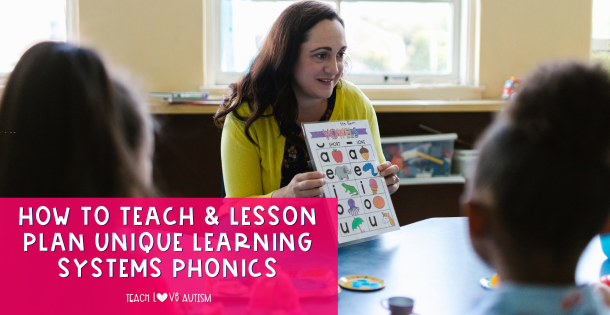
The Unique Learning Systems Phonics courses are something new. If you’re new to Unique Learning Systems, you might already know it provides monthly Reading and Math units, but did you know it also now includes a set of phonics courses aligned to the Science of Reading (SOR)? These lessons are designed to give students the systematic, explicit instruction they need to build foundational skills in phonemic awareness, phonics, decoding, and spelling.
For teachers in self-contained classrooms, this addition is huge. It means you no longer have to piece together separate phonics programs or hunt down decodable texts, ULS Phonics has integrated them right into the curriculum.
What Are the Unique Learning Systems Phonics Courses?
The phonics courses are a structured, evidence-based component of ULS Reading. Unlike the monthly themed comprehension units, these lessons focus on the mechanics of reading: teaching students how words are built, sounded out, and spelled.
Each lesson includes:
- Scripted teacher guides with explicit, step-by-step routines
- Implementation support and microlearning tips to help teachers feel confident teaching phonics
- Student practice materials in both digital and printable formats
- Age-respectful decodable texts (reader’s theater, graphic novels, short passages) that align directly to the phonics patterns taught

This alignment makes ULS Phonics a practical, ready-to-go solution for teaching foundational reading skills without needing an additional program.
Who Can Use the Unique Learning Systems Phonics Courses?
The beauty of the Unique Learning Systems Phonics program is that it can be used with all grade bands: from K–2 all the way through Transition. The difference is simply how you place students within the progression of skills.
- Younger students (Preschool/K–2) may begin with letter recognition and basic sound-symbol correspondence.
- Older students in middle or high school can work on blends, digraphs, or multisyllabic words without feeling like they’re using “babyish” materials.
- Transition-age students still developing decoding skills can use the age-appropriate decodable texts to practice phonics patterns in ways that feel relevant and respectful.
In other words, the phonics courses are for any student who needs explicit support with decoding, no matter their grade band.
How Are the Courses Broken Down?
Unique Learning Systems Phonics follows a scope-and-sequence that covers all foundational phonemes. The lessons build from simple to complex skills:
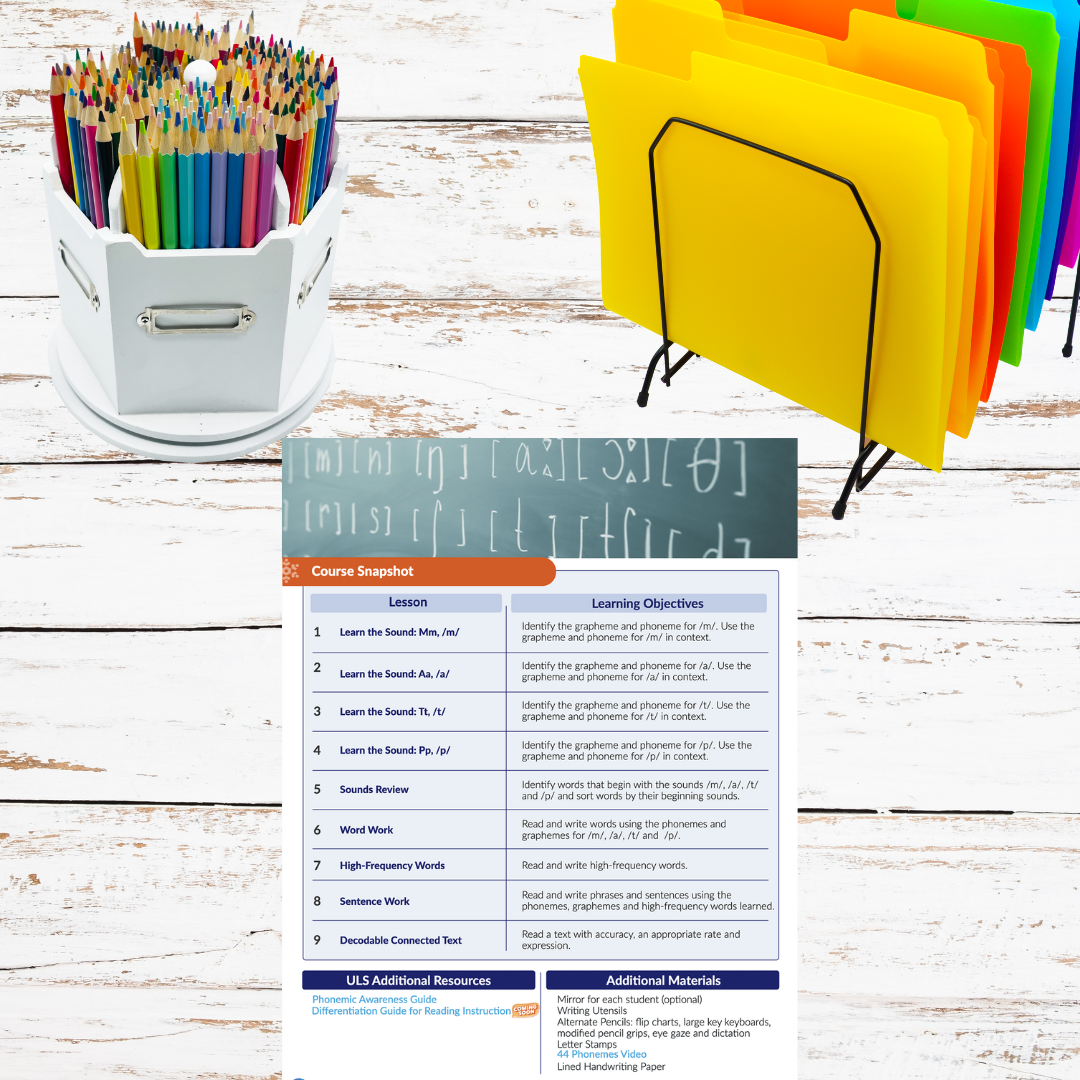
- Letter Recognition & Sounds – Uppercase/lowercase, initial sounds
- Short Vowels & CVC Words – Simple blending and segmenting
- Consonant Blends & Digraphs – More advanced sound combinations
- Long Vowels & Silent e – Teaching spelling patterns and vowel rules
- R-Controlled Vowels & Vowel Teams – Expanding decoding strategies
- Multisyllabic Words – Breaking words into syllables for fluency
- Encoding & Spelling Practice – Applying phonics skills in writing
Because the lessons follow a predictable routine, students can quickly learn what to expect. Each time you introduce a new skill, the structure stays consistent, giving students confidence and repetition while still moving forward.
What Skills Do They Cover?

Across the Unique Learning Systems Phonics courses, students gain practice with:
- Phoneme recognition
- Sound-symbol correspondence
- Blending and segmenting
- Decoding unfamiliar words
- Recognizing and applying spelling patterns
- Reading fluency with decodable text
- Encoding (spelling) that matches phonics instruction
These skills are taught explicitly and systematically, in line with Science of Reading principles.
Using Unique Learning Systems Phonics in a Self-Contained Classroom
ULS Phonics can be integrated across the four main types of instruction you’re already using:
- 👩🏫 Whole Group – Introduce the new sound or phonics pattern to all students together using shared routines.
- 👥 Small Group – Break students into leveled groups to practice skills that meet their current decoding needs.
- 🤝 1:1 Instruction – Target specific IEP goals in phonics, fluency, or spelling with intensive practice.
- 📝 Independent Work – Provide decodable passages, phonics worksheets, or digital activities in work binders or stations for consistent reinforcement.
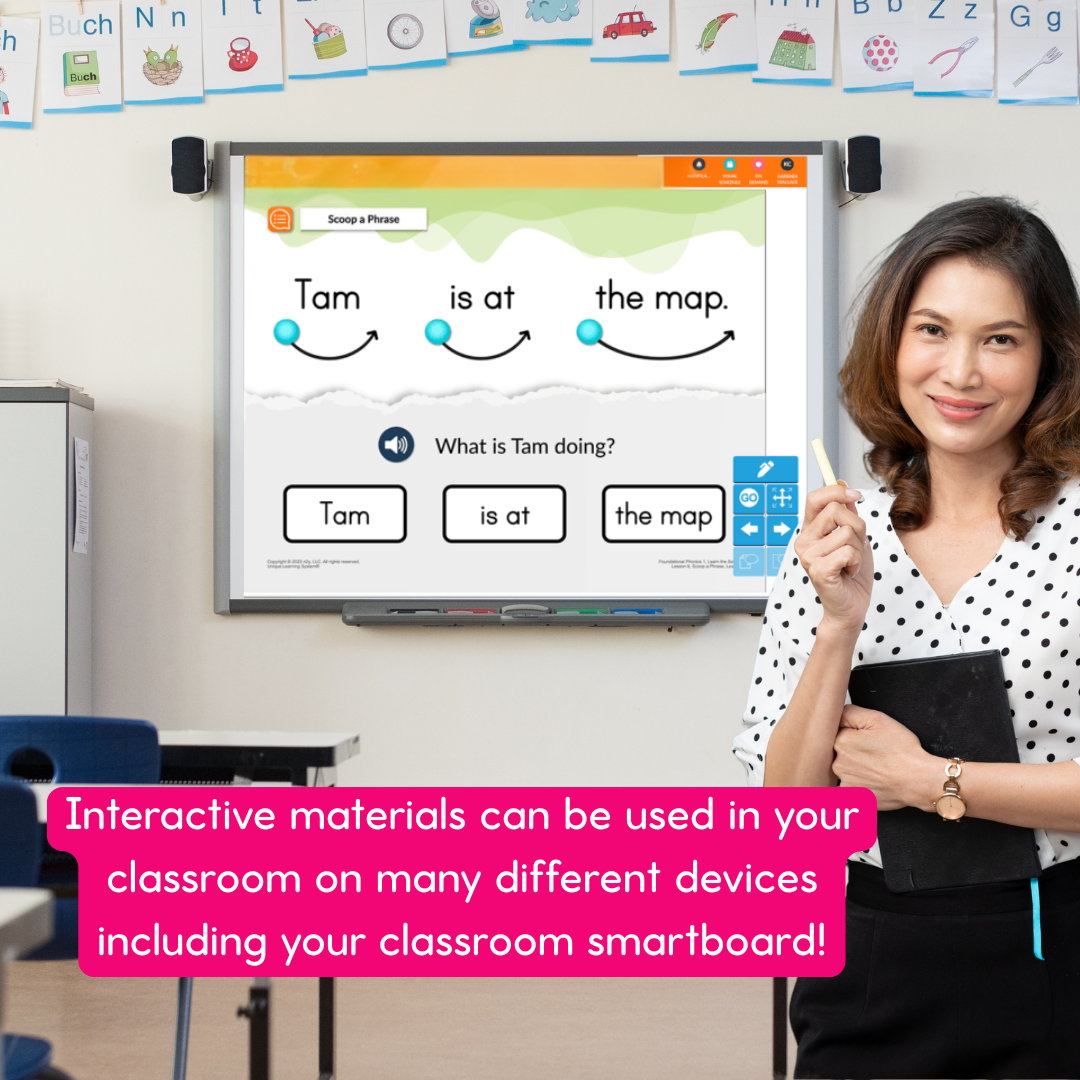
Because the lessons include decodable texts and aligned practice, you can immediately connect direct instruction with application, helping students practice the exact patterns they’re learning.
Final Thoughts
The addition of Science of Reading–aligned phonics courses to Unique Learning System makes it an even stronger tool for building literacy. With a clear scope-and-sequence, predictable lesson routines, and age-respectful decodable texts, it’s designed to give every student meaningful access to phonics instruction.
That said, just like with the Reading and Math units, you may find gaps depending on your students’ needs. Some will need extra practice, multisensory reinforcement, or functional reading applications beyond what ULS provides. That’s where the Teach Love Resource Membership comes in, offering supplemental resources that pair perfectly with ULS and give you the flexibility to meet your students exactly where they are.
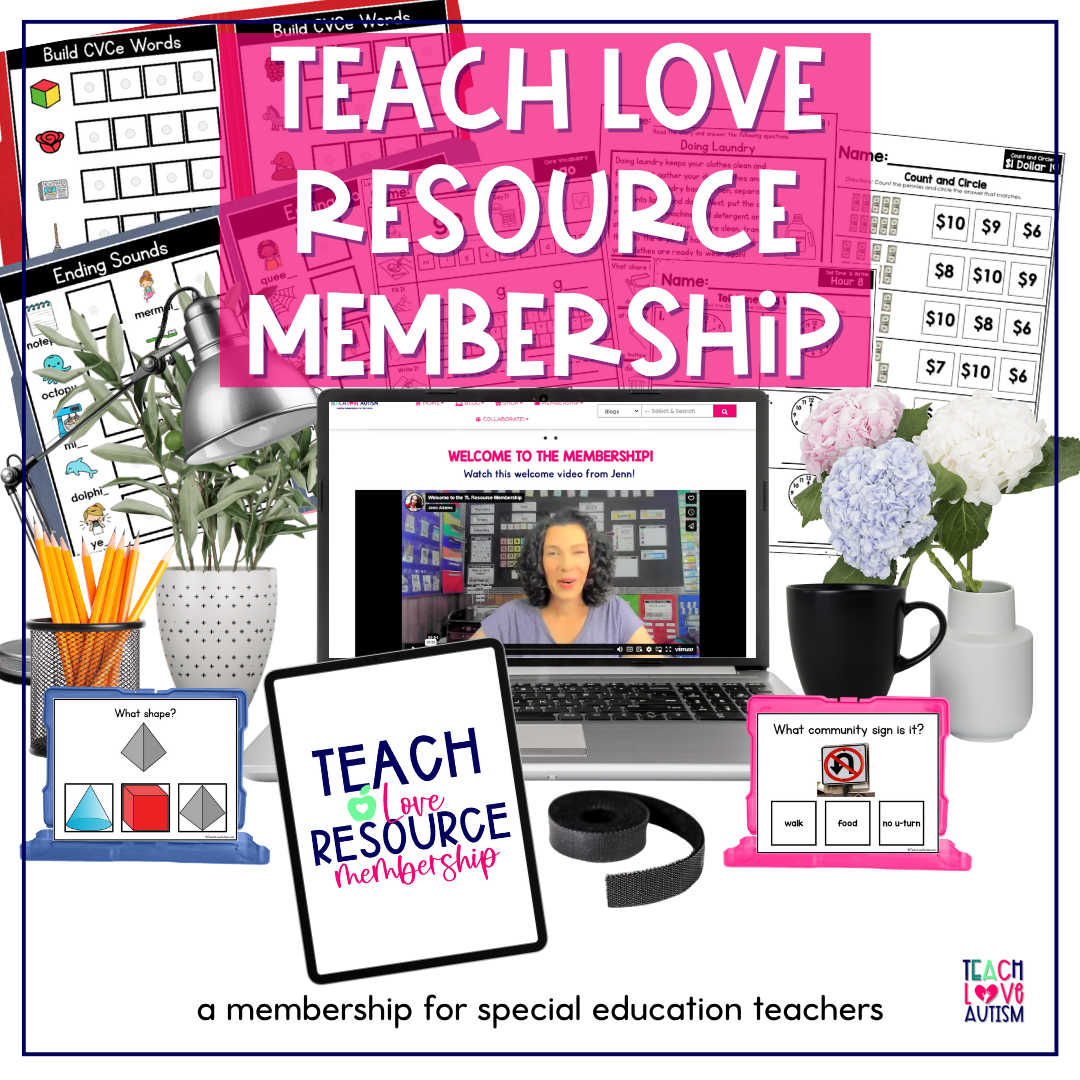
👉 Want to save time and get more tools for your phonics and reading block? Check out the Teach Love Resource Membership today and start building a library of supports that fit seamlessly alongside ULS.