


If you’ve been around here for any amount of time, you already know how much I love teaching addition with digital task cards because they make math feel fun and accessible for every learner. Whether you’re teaching in the classroom, navigating virtual learning, or juggling both, digital addition activities give your students meaningful practice with tools they can use anywhere. They’re self-correcting, easy to assign, and packed with instant feedback. That’s everything we want when we’re teaching addition in a way that supports independence and keeps our students excited to learn.

Why Digital Resources Make Teaching Addition So Effective

One of the biggest reasons I love using digital resources when teaching addition is the immediate feedback my students receive. Instead of waiting for you to check their work, they know right away if they’re on the right track. This builds confidence in a way that traditional worksheets just can’t match. It transforms math practice from something repetitive into something interactive and exciting. Your students feel successful faster, and that feeling motivates them to keep going.
Another thing that makes these digital tools so valuable is how flexible they are. Your students can access them on tablets, Chromebooks, phones, and laptops. Truly, whatever device your classroom or school uses. Whether you’re assigning them during math centers, using them during small groups, or sending them home for extra practice, they create a seamless learning experience that fits into any routine. Teaching addition becomes smoother because your students can jump right in and get the practice they need without a lot of prep on your end.
That flexibility takes a huge weight off your shoulders. Instead of spending time printing, organizing, or collecting papers, you can focus on supporting your learners as they work. Digital task cards give your students the repetition they need, but in a format that feels modern, engaging, and student-friendly. It’s one of the easiest ways to keep your addition practice fresh while still staying intentional with your instruction.
We can’t forget the engagement factor. Kids love using technology, and they love anything that feels like a game. Combining technology with learning addition makes math a lot more fun. And… once we can get them engaged in the activity, we know that the learning improves. That’s a win in my classroom!
Teaching Addition with Self-Correcting Digital Task Cards
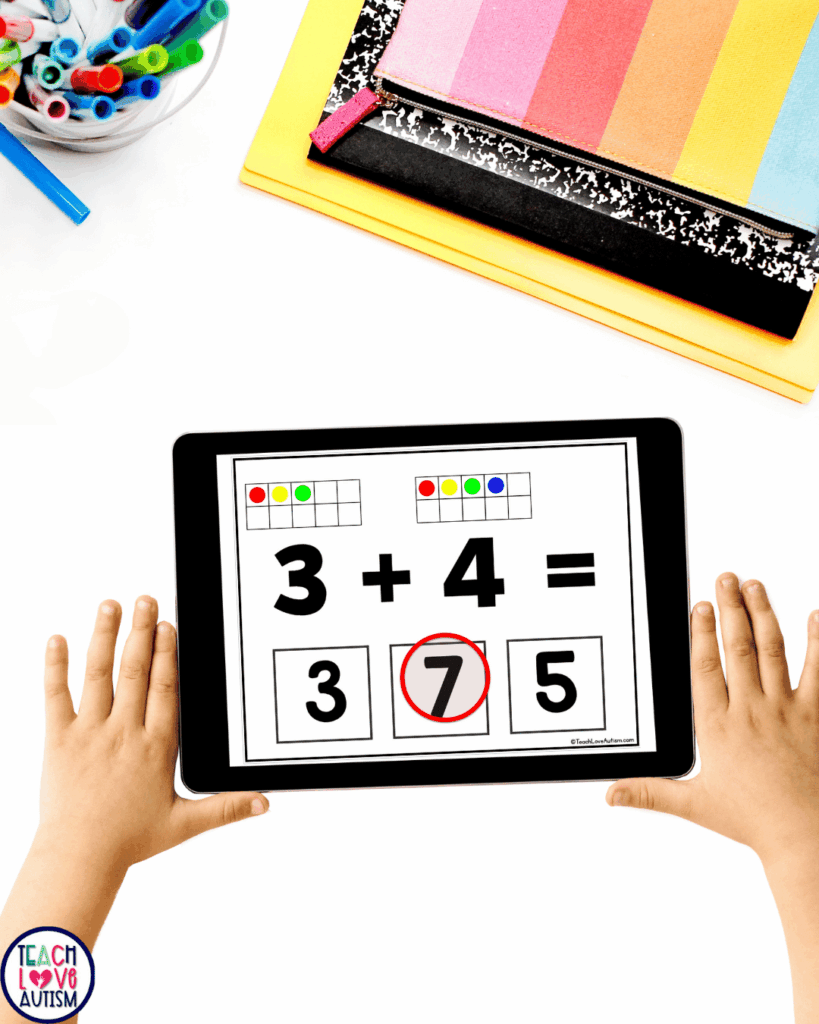
Let’s talk about my favorite type of digital resource to use when teaching addition – BOOM Cards and interactive PDFs. I’ve always loved BOOM Cards because they’re easy for my students to navigate. They work so well for so many subjects. If you’ve never tried Boom Cards before, they’re essentially digital task cards that are automatically self-checking. This makes them perfect for teaching addition in a way that feels playful and motivating.
In this Addition Facts Digital Task Cards set, your students practice sums from 0–10 with clear, simple prompts on every card. Each problem comes with three answer choices. This keeps things approachable, especially for your young learners or your students who may feel overwhelmed by too many options. When your students click the correct answer, the card tells them to move on. If they get the answer incorrect, the program gently prompts them to try again until they get it right. It’s basically flashcards made fun again!
What I love most about this resource is how adaptable it is for you. You can upload the interactive PDF version to Google Classroom, Seesaw, Schoology, or any learning platform your school uses. It also works beautifully on computers, tablets, smart boards, and even smartphones. Since it’s completely paperless and zero prep, it saves time while still giving your students high-quality practice. This product also includes free Boom Learning access with your purchase, so you can use whichever format works best for your learners.
Teaching Addition with Number Dots
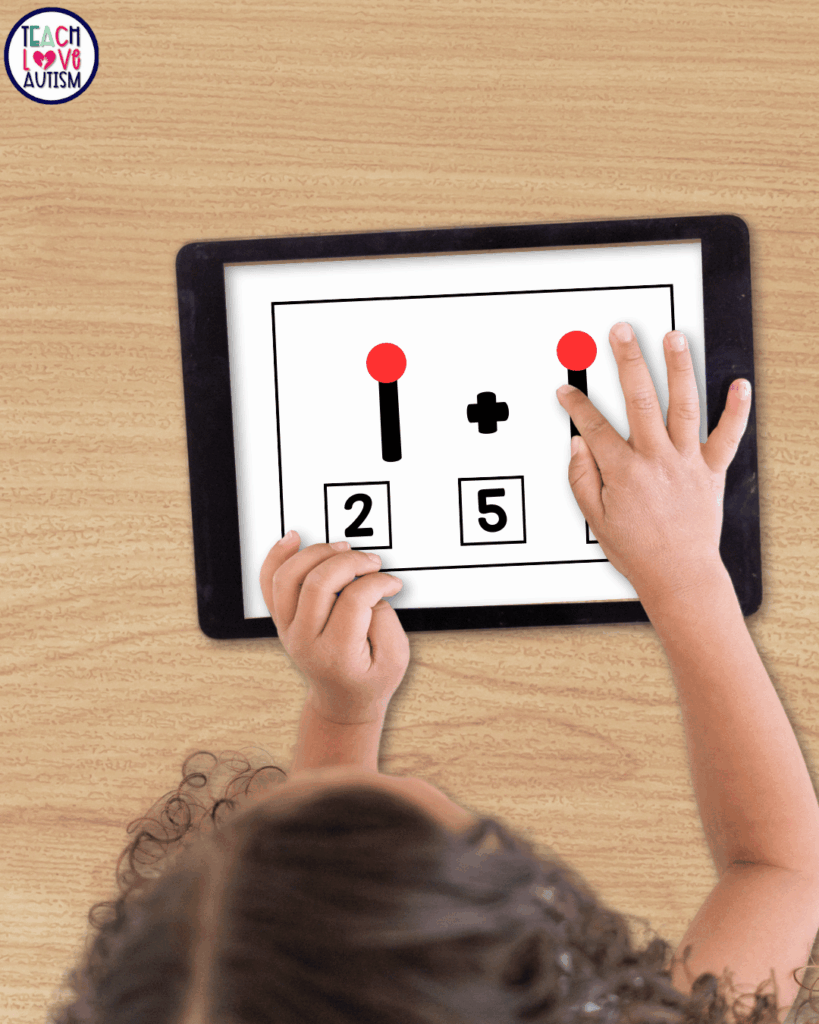
If you’ve ever used counting dots on numbers in your classroom, then you know why so many teachers swear by this approach. It’s brilliant for your visual learners or for your students who rely heavily on finger counting. It’s also effective for anyone who benefits from structured, predictable visuals when learning new math skills. When I’m teaching addition to my students who need tactile or visual support, adding dots to each number has always been one of my go-to strategies.
Every number has a set of dots. One on the number one, two on the number two, and so on. Your students simply tap each dot as they count. This helps them see and feel the value of each number. Traditionally, your students tap these points with the tip of a pencil, which is great for keeping everyone holding their writing tools and staying focused, rather than reverting to fingers.
Now imagine taking that same strategy and bringing it into the digital world. No pencils required. Your students just tap with their fingers! That’s exactly why I created digital task cards that put counting dots right on each number. They’re perfect for teachers who already use a dot counting strategy or for anyone looking to introduce more visual supports when teaching addition. These digital cards mirror the traditional approach but make it even more accessible for tech-based learning.
Hands-On Ways to Support Students When Teaching Addition

Even though I love digital learning, I know there’s something special about hands-on, tactile math practice. That’s why I’m also obsessed with using Hands-On Addition Task Cards with counting dots when teaching addition. These cards give your students a visual representation of each number using dots. This helps them make sense of the equation rather than just memorize facts.
When your students are still developing number sense, having visuals makes a huge difference. The dots help them count all or count on, which are two essential strategies for early addition. It’s especially helpful for kindergarteners, first graders, and your students receiving math intervention or special education services. These kiddos often need clear, consistent visuals to bridge the gap between the concrete and abstract stages of math.
How I Use These Resources When Teaching Addition
When I’m teaching addition, I like to rotate these resources throughout the week. Some days, we use the digital task cards for fluency practice. On other days, we pull out the dot-based task cards for hands-on reinforcement. If my students need more support, that’s where the number dots version comes in. Every resource serves a purpose, and together they create a balanced, student-friendly approach.
These activities fit smoothly into centers because your students can work independently without constant support. They also pair well with small-group instruction, especially when you’re targeting specific skills or reteaching. Since every option is either printable or paperless, they work well whether you’re in the classroom or navigating virtual learning.
Helping Your Students Thrive with Addition

Teaching addition doesn’t need to be stressful, overwhelming, or time-consuming. When you mix in visuals, technology, and hands-on opportunities for success, your students stay motivated, confident, and excited to practice their math skills. The more engaging the tools, the more willing they are to try, explore, and celebrate their growth. That’s exactly why teaching addition with a variety of resources can make such a difference in your classroom or virtual learning space.
What I love most about this approach is how naturally it supports every type of learner. Your visual students get the clarity they need, your hands-on kiddos get something to manipulate, and your tech-loving learners get to dive into something interactive. It all works together to build strong number sense without the stress or frustration that often sneaks in during math practice. When your students feel supported, they’re far more willing to take risks and develop the confidence that will carry them into more complex math skills later on.
At the end of the day, teaching addition becomes so much easier when you have a toolbox full of flexible, engaging, and student-friendly activities. These resources give everyone exactly what they need to feel successful. When your students feel successful, everything else just falls into place.
Explore Additional Resources

If you’re looking for even more ways to build confidence and independence while teaching addition and other foundational skills, you’ll love the collection of errorless activities I have available. These kinds of tasks are perfect for helping your students feel successful from the start, especially when they need extra support or benefit from structured, low-stress practice. They reinforce learning in a way that feels achievable, motivating, and empowering for every learner.
Errorless activities are one of my favorite tools for reducing frustration and increasing engagement. Your students can focus on the skill without the fear of making mistakes. This helps them build momentum and trust in their own abilities. Whether you’re working with early learners, students with disabilities, or anyone who needs a more accessible entry point into math, errorless tasks make a huge difference.
Save for Later
Save this post for later so you can come back when you’re planning your next math unit or looking for fresh ways to support your learners. Whether you’re building math centers, prepping for small groups, or searching for digital activities that actually keep your students engaged, this post will be right here waiting for you. Pin it, bookmark it, or share it with a teammate so you’ll have everything you need at your fingertips whenever you’re ready to make teaching addition easier and enjoyable.