
Give your students hands-on, multisensory practice with the heart words they need most. This no-prep worksheet bundle covers 10 high-frequency words using Science of Reading principles — teaching students to decode what they can and memorize the irregular parts. Four practice pages per word, print and go, perfect for small group, independent work, or homework.
Heart Word or Sight Word Worksheets — Science of Reading Aligned Practice for High-Frequency Words
$0.00
Description
Give your students hands-on, multisensory practice with the heart words they need most. This no-prep worksheet bundle of heart word or sight word worksheets covers 10 high-frequency words using Science of Reading principles — teaching students to decode what they can and memorize the irregular parts. Four practice pages per word, print and go, perfect for small group, independent work, or homework.
What’s Included:
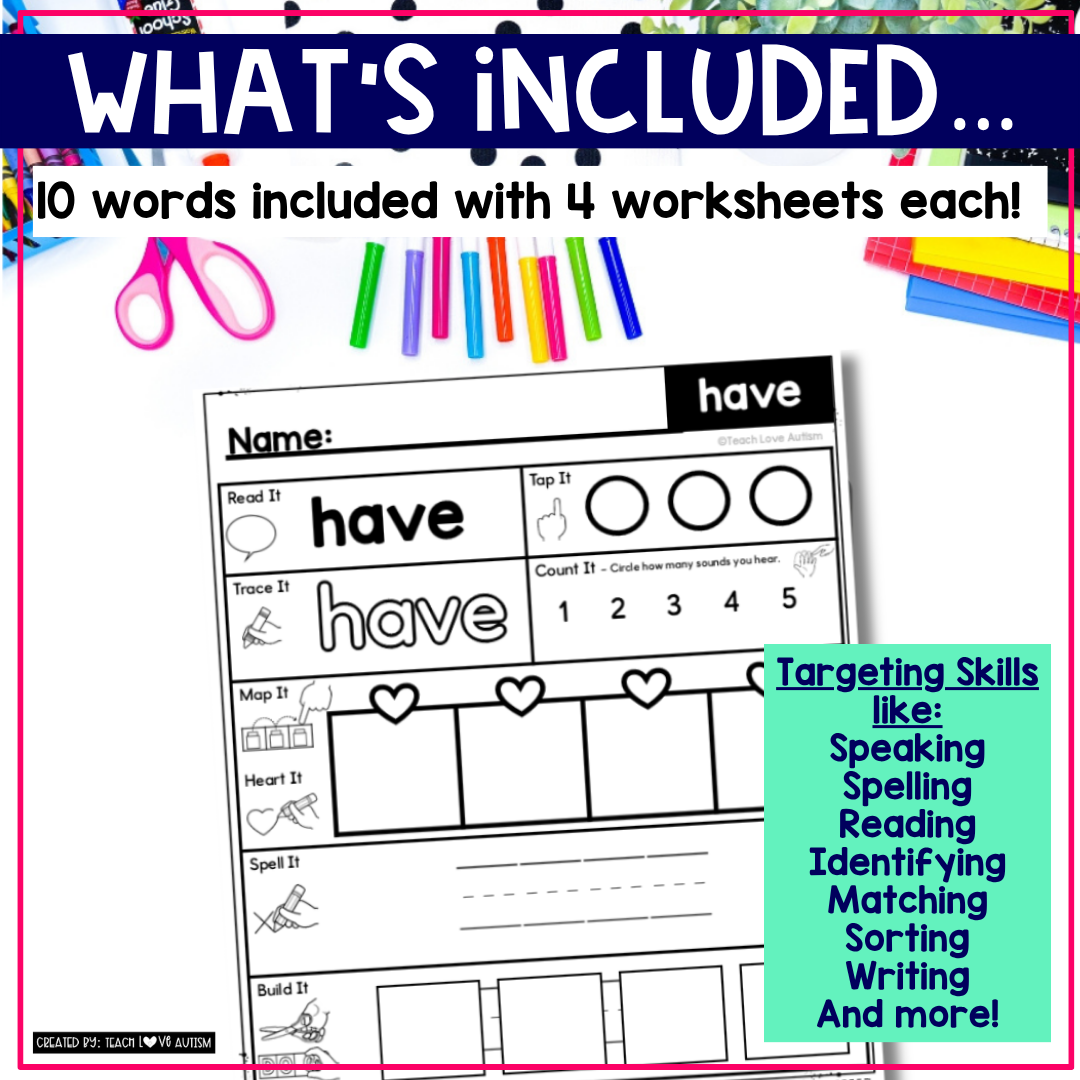
10 heart words: the, said, was, they, have, what, come, some, of, one
Each word includes 4 worksheet formats:
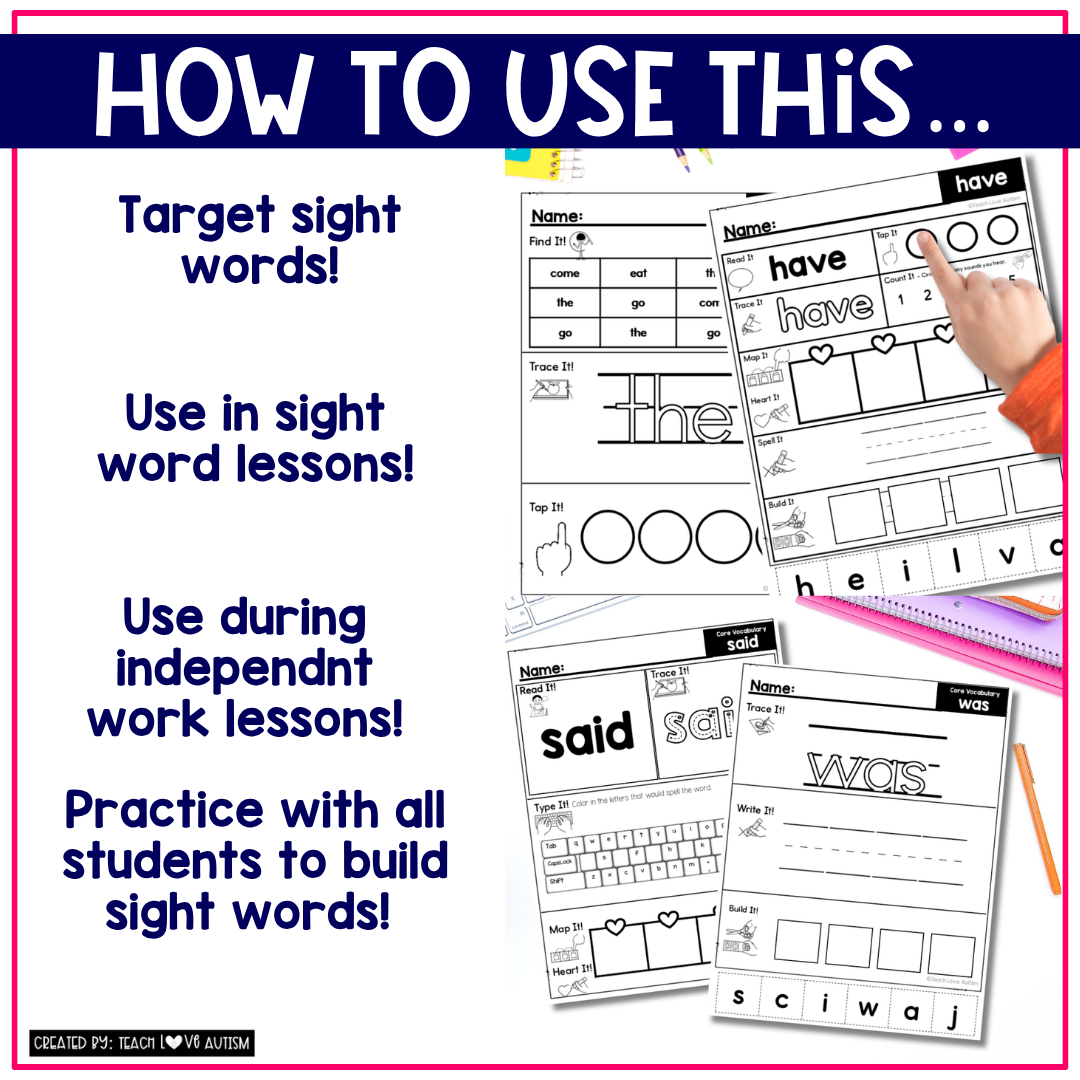
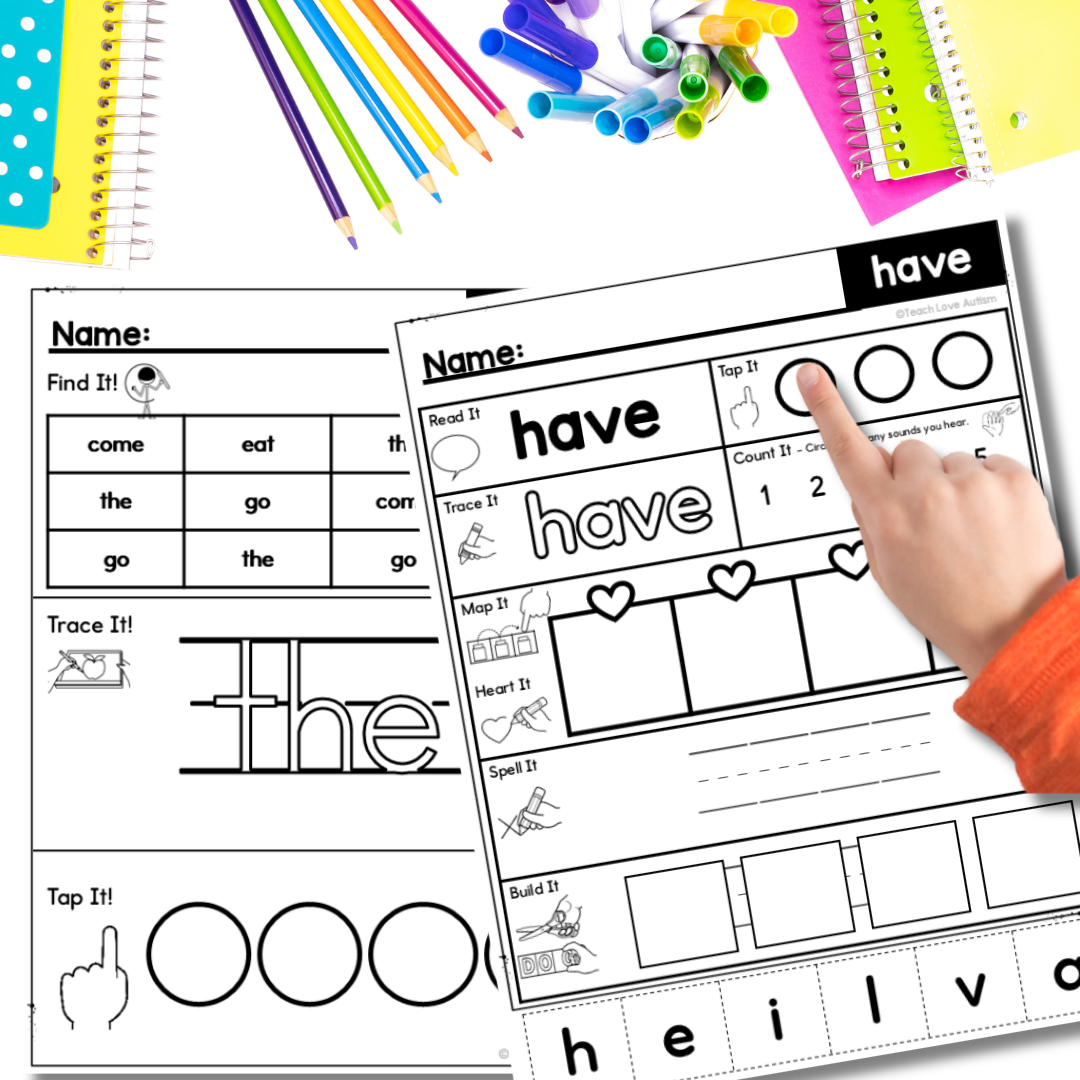
Page 1 — Multisensory Practice: Read It, Trace It (large hollow letter format), Tap It, Count It, Map It, Heart It, Spell It, Build It with cut-and-paste letters
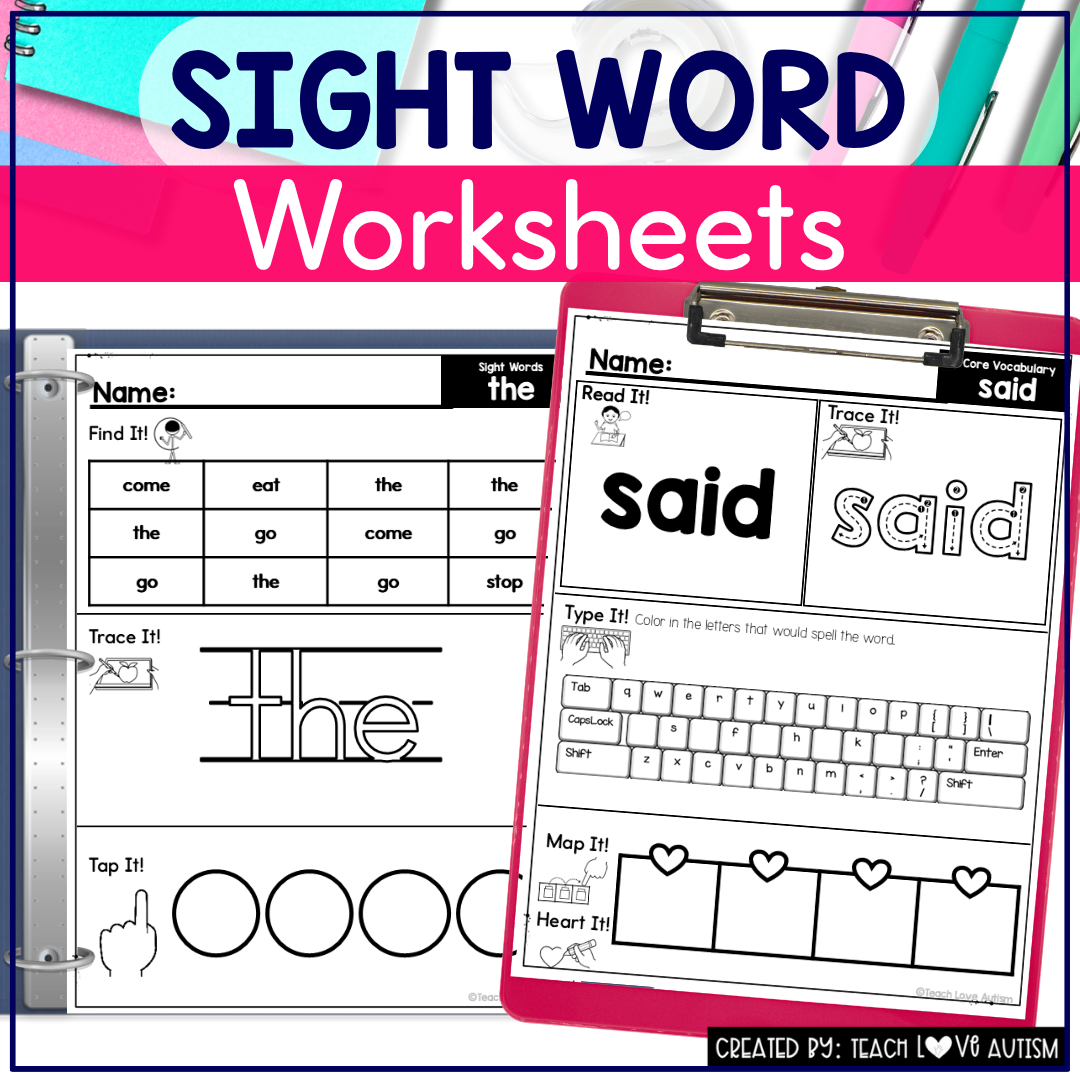
Page 2 — Find It, Trace It, Tap It: Word recognition grid, large-format hollow letter tracing, and sound tapping circles
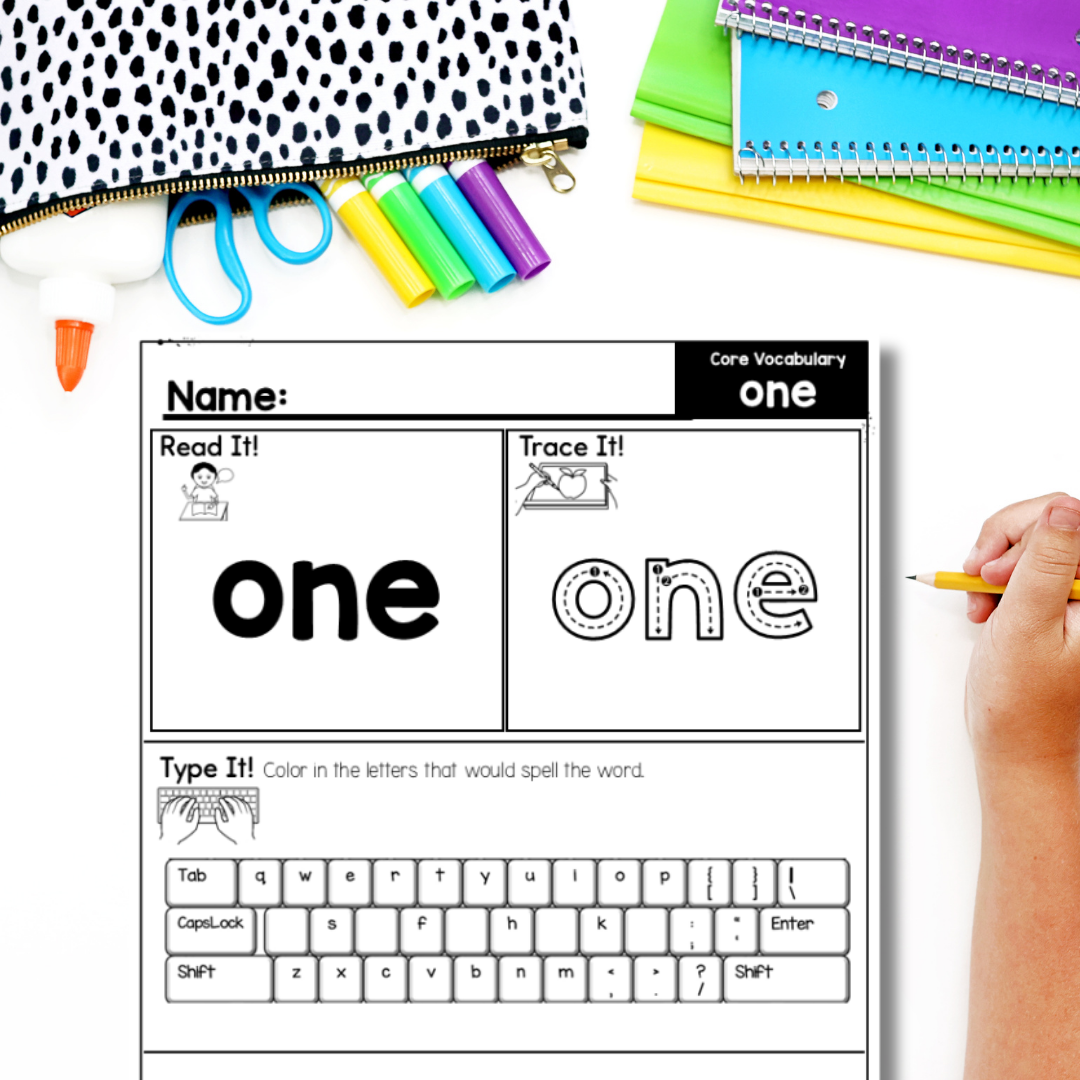
Page 3 — Read It, Trace It, Type It, Map It, Heart It: Directional letter tracing with stroke numbers, keyboard coloring activity, and sound mapping boxes with heart markers for irregular parts
Page 4 — Trace It, Write It, Build It: Large hollow letter tracing, three-line writing practice, and cut-and-paste letter building
Also includes a teacher resource page explaining the Science of Reading framework, the difference between permanently and temporarily irregular words, and how to use the Heart It feature with each student based on their phonics level.
How to Use This Resource
These worksheets are designed to be flexible — use them however they fit your classroom routine best.
In small group instruction: Pull the word you’re targeting and work through the pages together. Use Page 1 as your guided practice page — read it together, tap the sounds, map it, heart the irregular part as a group, then have students spell and build independently while you watch for errors.
As independent work or a center activity: Pages 2, 3, and 4 are perfect for students to complete on their own once they’ve had direct instruction on the word. No prep needed — just print and go.
For homework or practice packets: Send home one or two pages per word for additional repetitions outside of school. The cut-and-paste Build It activity is a great homework option because it’s engaging enough that kids actually do it.
For progress monitoring: The Spell It and Write It sections give you a quick snapshot of where students are. If a student can spell it from memory, they’ve got it. If not, you know they need more practice trials before moving on.
One word at a time or bundled: You can introduce one new heart word per week and use all four pages across the week, or bundle several words together for a review unit. Both approaches work.
Why Teachers Need These Heart Word or Sight Word Worksheets
Heart words are not optional in a Science of Reading classroom — they are foundational. Students encounter words like the, said, and was on nearly every page of every early reader. If they can’t read them automatically, their cognitive load goes up and their comprehension goes down. Every mental resource they spend trying to decode was is a resource they can’t spend on meaning.
But most sight word practice resources are built on the old model — flashcards and repetition without any explicit instruction about why the word looks the way it does. This bundle is different because it teaches students to look at the word carefully, identify what sounds they can decode, and only memorize the part that doesn’t follow the rules. That’s exactly what the Science of Reading says to do.
The Map It and Heart It sections are the key. Instead of just tracing and copying, students are mapping each sound into a box and marking the irregular part with a heart. That’s not busywork — that’s orthographic mapping. It’s the process that moves words from effortful decoding into automatic recognition, which is exactly what struggling readers need more of.
These pages also work across a wide range of learners. For your on-level students, they build automaticity and confidence. For your struggling readers, the multisensory format — trace it, tap it, map it, build it — gives them multiple pathways to the same word, which increases the chance it sticks. And for students with IEPs who need more repetition and explicit instruction, these pages give you a consistent, structured format you can use week after week without having to reinvent anything.
No prep. No cutting apart teacher materials. No laminating. Just print, hand it out, and teach.
Related
Only logged in customers who have purchased this product may leave a review.
Related products
-

Counting Money Task Card Activity: Winter FREEBIE
$0.00somdn_product_page -
Printing Digital Task Cards Instructions
$0.00somdn_product_page -
Digital Core Vocabulary Activity for BIG Boom Cards
$0.00somdn_product_page -
FREE Errorless File Folders with Real Photos
$0.00somdn_product_page

Reviews
There are no reviews yet.