



You know that look your student gives you when they finally get something right and they know it? That spark of pride? That’s what errorless learning is all about. In special education, we’re not just teaching skills. We’re building confidence, reducing frustration, and showing our students what success feels like from the very first try. Instead of guessing and hoping they get it right, they’re guided through what “right” actually looks like. That changes everything. Momentum builds. Behaviors ease. Independence grows. Let’s take a closer look at how errorless learning can create more wins for you and your students.
What is Errorless Learning?
Errorless learning is an instructional strategy that sets our students up to respond correctly right away. I build in the support they need at the start, so errors are rare or don’t happen at all. As my students experience consistent success, their confidence increases and their understanding deepens.
When I design errorless choices on worksheets or hands-on tasks, I also reduce the need to verbally prompt. That keeps me from over-prompting and keeps my students from relying on my voice to respond. The activity itself guides them to the correct answer.
Over time, errorless learning becomes a routine that our students can trust. They know the task is doable and that success is within reach. That mindset shift makes practice smoother and learning stickier.
Errorless Learning is an Antecedent Intervention
Errorless learning is considered an antecedent intervention in Applied Behavior Analysis because it happens before the response. You want to arrange the environment, the materials, and the prompts so your student contacts success immediately. Fewer errors mean more access to reinforcement.
More reinforcement usually leads to calmer, more motivated learners. When the task feels achievable, our students are more willing to try. That willingness opens the door to steady progress.
By lowering the chance of mistakes, you also lower the chance of escape behaviors or refusals. Challenging behaviors often fade when the work feels clear and supported. Errorless learning creates that clarity from the start.
How Errorless Learning in Special Education Uses Prompting
Prompts are the bridge to independence in errorless learning. At the start, you want to provide the level of help that guarantees a correct response. That might be a full physical prompt, a model, or a highlighted answer choice.
Once the response is strong, you’ll fade your help on purpose and on a schedule. You will shift from more intrusive to less intrusive prompts. You’ll want to aim for the lightest touch possible while keeping accuracy high.
Pay attention to how your student responds to each prompt level. If accuracy dips, you’ll increase support again before fading more slowly. That keeps the experience positive and productive.
Fading Prompts with Errorless Learning
Prompt fading is where errorless learning really shines. I often begin with most-to-least prompting so success happens right away. Then I move to partial prompts, models, gestures, and finally minimal cues.
A time delay can be powerful. I wait a second or two before prompting so my student has a chance to respond independently. If they don’t respond, I step in with the planned prompt.
The goal never changes. I want a clean, unprompted response that my student can do anytime, anywhere. Slow and steady fading gets us there.

Benefits of Errorless Learning
Our students can often feel frustrated when a skill is brand new. Errorless learning reduces that frustration because success happens right away. Quick wins matter for buy-in.
Those wins build motivation. Motivation keeps practice going long enough for real learning to stick. When our kiddos feel capable, they practice more and avoid shutdowns.
As our students practice accurate responses, reinforcement becomes frequent and predictable. Engagement rises because success is expected. Later, when I fade prompts, the correct response pattern stays strong.

Difference Between Errorless Learning and Traditional Learning
Traditional learning often asks our students to choose from several options without supports. That creates real opportunities for errors. In errorless learning, I change the conditions so the correct choice is clear at the start. As accuracy stabilizes, I introduce more distractors or reduce the level of support.
Both approaches can teach skills, but the emotional experience is different. Errorless learning protects dignity and effort by stacking the deck for success. I see more participation, fewer refusals, and steadier growth when I start here.
As independence grows, I raise the challenge in small ways. The shift feels natural and keeps motivation intact. Our students learn without the heavy cost of repeated mistakes.
A Simple Plan for Errorless Learning
I begin by defining the exact response I want. Then I choose the prompt that guarantees that response. I present the task, prompt immediately, and reinforce success.
I run brief, frequent trials so my student experiences many quick wins. Data stays simple and focused on accuracy and prompt level. That keeps decisions clear.
As accuracy holds, I fade prompts in small steps. If errors show up, I tighten support to restore success. Then I resume fading at a slower pace.
Data Collection and Progress Monitoring
My data stays simple in errorless learning. I track accuracy, the prompt level used, and the trend over short sessions. I don’t need long forms to see what’s working. I just need consistent notes that show how much support was required and how that support changed over time.
Those notes help me make quick decisions. If a student holds 90–100% accuracy for a few sessions, I fade one step. If accuracy wobbles, I tighten support to restore success and then try fading again later.
Short, frequent data checks tell a clear story. The story is about independence. With errorless learning, I want to see steady movement from most-to-least prompts while accuracy remains high.
Digital and Hands-On Ideas
Errorless learning works well with both print and digital materials. On screens, I make the correct action obvious at first. The interface guides my student to do the right thing without guesswork.
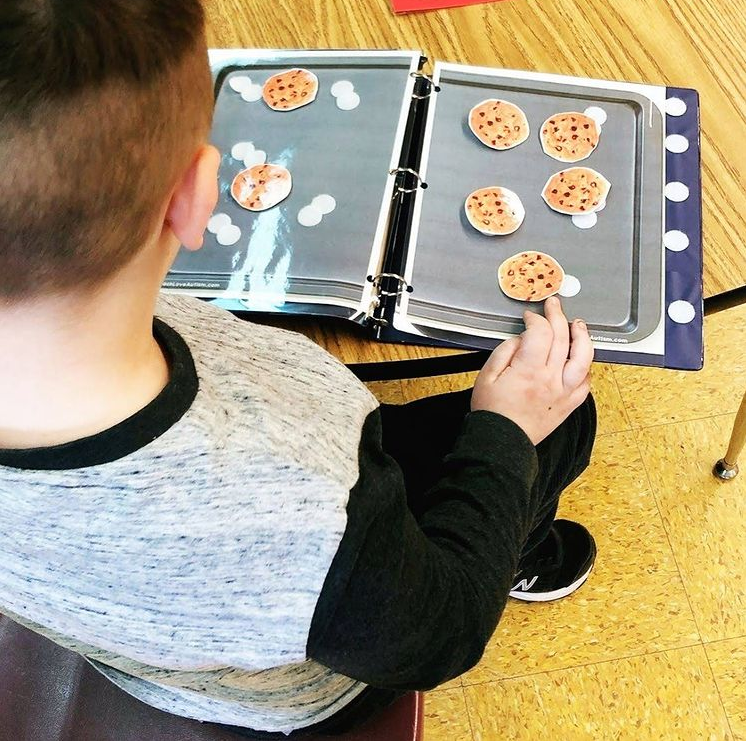
At the table, I use visuals that point to the answer. Color-coded mats, simplified fields, file folder activities, adapted books, and picture-supported directions create errorless learning in a concrete way. The design carries the weight so my students can focus on responding.
Whether our students are tapping, dragging, pointing, or placing, the setup matters most. The clearer the path, the calmer the learner. That calm leads to real growth.
Bringing Errorless Learning to Families at Home
Families love errorless learning because it feels doable at home. I send simple directions that show the task, the prompt I want them to use, and what to say after the correct response. I also share quick reinforcement ideas that match the child’s interests.
Home practice stays short and upbeat. I suggest two or three wins in a row and then a break. That pattern protects motivation and helps our families see progress quickly.
When school and home match in structure and language, independence grows faster. Errorless learning gives everyone the same map, which makes teamwork easier.
Common Pitfalls and How I Avoid Them
One pitfall is fading too fast. If I remove supports before the response is stable, accuracy drops and frustration rises. I avoid this by waiting for consistent data before I fade and by changing only one thing at a time.
Another pitfall is over-prompting with my voice. If I talk through every step, my students can become prompt-dependent. I lean on visuals, positioning, and models instead. I also keep my language brief and neutral.
A third pitfall is leaving distractors too similar too soon. I control difficulty with size, color, spacing, and clarity. When my students show strong accuracy, I tighten those variables slowly so success remains the default.
Classroom Materials That Support Errorless Learning
If you’re ready to take errorless learning to the next level, I’ve got you covered! Visit my store on my website to access a full collection of resources of task cards, BOOM cards, file folder activities, and adapted reading bundle that all promote confidence and success through errorless learning. These resources are designed to meet your students right where they are and help them build essential skills without frustration or overwhelm.
Each activity gives your students the chance to respond correctly, experience success, and grow more independent in their learning. Whether you’re looking for digital options, printable materials, or hands-on activities, you’ll find resources that make implementing errorless learning both practical and engaging.
Head over to my website to explore all of these errorless learning materials and discover new ways to make learning accessible and fun for every student!


Looking for some errorless materials to try out before making the full jump in? Sign up below!



Building Independence with Errorless Learning
Errorless learning is not about lowering expectations. It’s about building a clear path to independence. When our students experience success first and often, they stay engaged long enough to truly master the skill.
With thoughtful prompting, steady fading, and consistent reinforcement, our students learn what to do and when to do it. That clarity reduces frustration and boosts confidence. Over time, you see more initiative and fewer prompts.
The best part is how doable this feels once you set it up. Small wins add up quickly. Errorless learning gives our kiddos the practice they need and the pride they deserve.
Save for Later
Want to keep these ideas handy for your next lesson plan? Save this post so you can grab quick wording, prompt levels, and setup tips when you’re planning errorless learning in special education. A quick reference goes a long way on a busy day.