Description
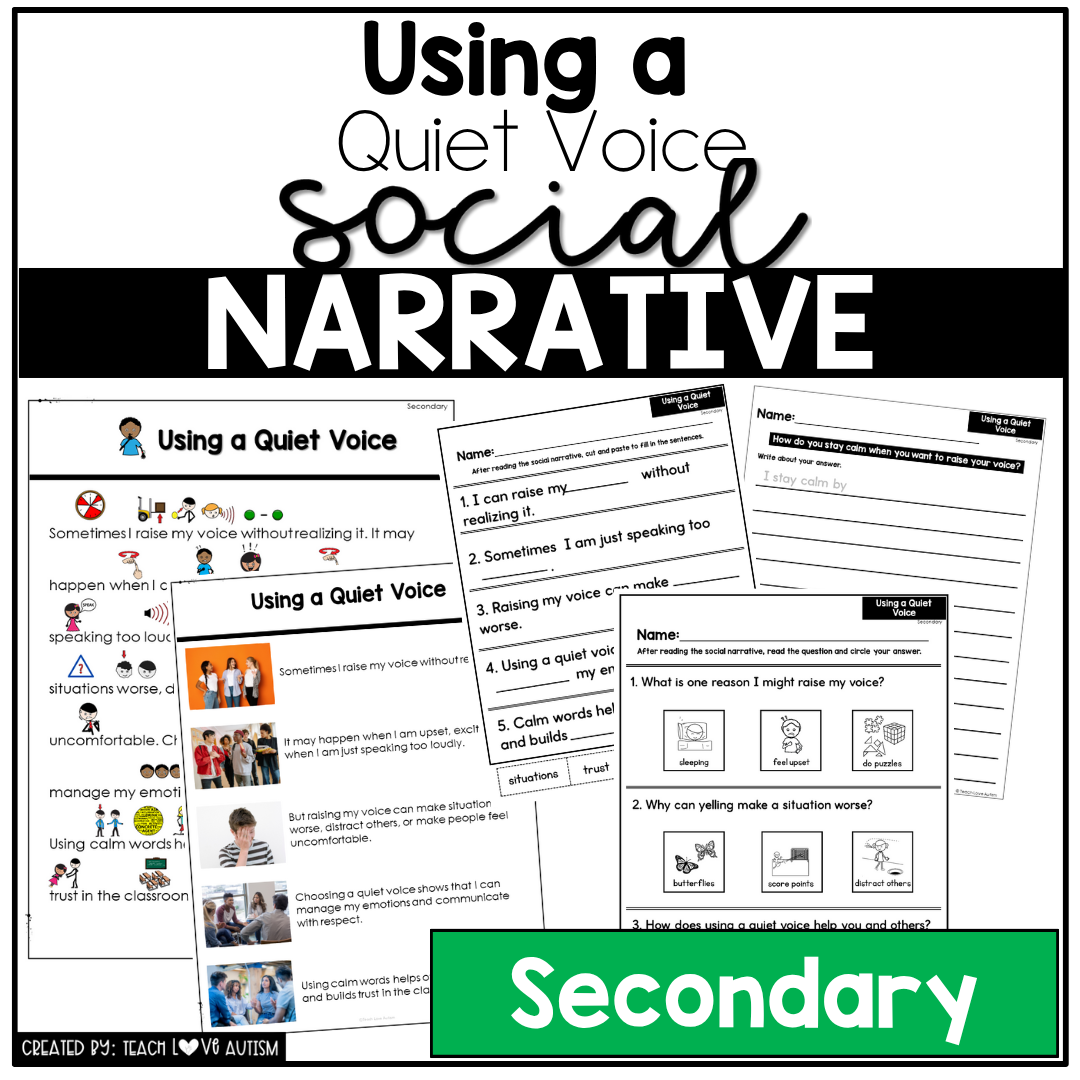
This Using a Quiet Voice Social Narrative for Secondary helps middle and high school students notice when their voice gets loud, understand how it affects the people around them, and practice choosing a calmer voice. You get one short, respectful story plus 6 worksheets, so you can teach the skill and check understanding without building anything yourself.
Teaching younger students? Grab the Elementary version or the Preschool version.
What’s Included in the Using a Quiet Voice Social Narrative for Secondary
- 1-page social narrative in 3 versions: full color symbols, black and white symbols, and real photos
- 2 comprehension worksheets: a 3-question page with picture choices and a 5-question page with word choices
- 2 vocabulary worksheets: fill in the blank with a word bank, and cut and paste
- Writing activity at 2 levels: draw and write, or write only, both with an “I stay calm by…” sentence starter
Ways to Use This Social Narrative
- Whole group on the smart board during advisory, morning meeting, or SEL lessons
- Small group with students who are working on the same behavior goal
- 1:1 before a loud or exciting part of the day, like an assembly, lunch, or a class party
- Behavior support or intervention time
- Life skills and transition programs
How the Using a Quiet Voice Social Narrative for Secondary Works
Older students don’t need a baby story about “inside voices.” This one is written in first person and talks to them like the young adults they are. It names the real reasons a voice gets loud (being upset, being excited, or just not noticing) and explains what happens next: situations get worse, classmates get distracted, and people feel uncomfortable. Then it ties a quiet voice to things teens actually care about, like managing their emotions, being respected, and being heard.
The plan that works best is one story a week. Read it together on Monday. The Using a Quiet Voice Social Narrative for Secondary comes with enough worksheets to use a different one each day, so students hear the same message from a few angles. In self-contained classrooms, the students who need this story most usually need to hear it more than once, and that repetition is what makes it stick.
Why Teachers Love This Secondary Social Narrative
- ✓ Respectful for teens: calm, age-appropriate language with no little-kid tone.
- ✓ Three visual options: pick symbols or real photos to match each student.
- ✓ Built-in practice: comprehension, vocabulary, and writing pages are ready to go.
- ✓ Easy to differentiate: two levels of comprehension and writing in one file.
- ✓ No prep: print it or put it on the board and start.
Who It’s For
The Using a Quiet Voice Social Narrative for Secondary is written for students in grades 6 to 12 in special education, autistic support, life skills, emotional support, and self-contained classrooms. It also works in resource rooms, transition programs, and inclusive classrooms for any student who does better with clear expectations and visual support.
What You’ll Get
The Using a Quiet Voice Social Narrative for Secondary comes as one printable PDF with the story, all 6 worksheets, and the terms of use. After checkout, log in at teachloveautism.com and go to My Account, then Downloads.
Pair It With
Pair the Using a Quiet Voice Social Narrative for Secondary with these stories:
Want More Ideas Like This?
Join the Teach Love Autism Insider, my weekly email with classroom tips, new resources, and what’s working in my room right now. Sign up here.
Questions? Email support@teachloveautism.com.
Terms of Use
Copyright © Teach Love Autism. All rights reserved by the author. This product is to be used by the original downloader only. Copying for more than one teacher, classroom, department, school, or school system is prohibited. This product may not be distributed or displayed digitally for public view. Failure to comply is a copyright infringement and a violation of the Digital Millennium Copyright Act (DMCA). Clipart and elements found in this PDF are copyrighted and cannot be extracted and used outside of this file without permission or license. Intended for classroom and personal use ONLY. See product file for clip-art and font credits.
Related
QUESTIONS AND ANSWERS
Have a question about this resource?
Log in to your account to ask. I'll email you when it's answered.
LOG IN TO ASK
No questions yet. Be the first to ask!