Imagine your student standing in front of the snack aisle, frozen. They’re holding a dollar bill and a snack in each hand, unsure which one they can afford. That moment that includes a pause, a decision, and the confidence to choose is why life skills instruction matters.
Our students need more than academic knowledge to be successful. They need practical, real-world skills they can use every day. Teaching money management builds independence in a way that worksheets alone never can. That’s why grocery store simulations have become one of my favorite ways to teach functional life skills for special education learners.
Why Grocery Store Simulations Matter for Life Skills for Special Education
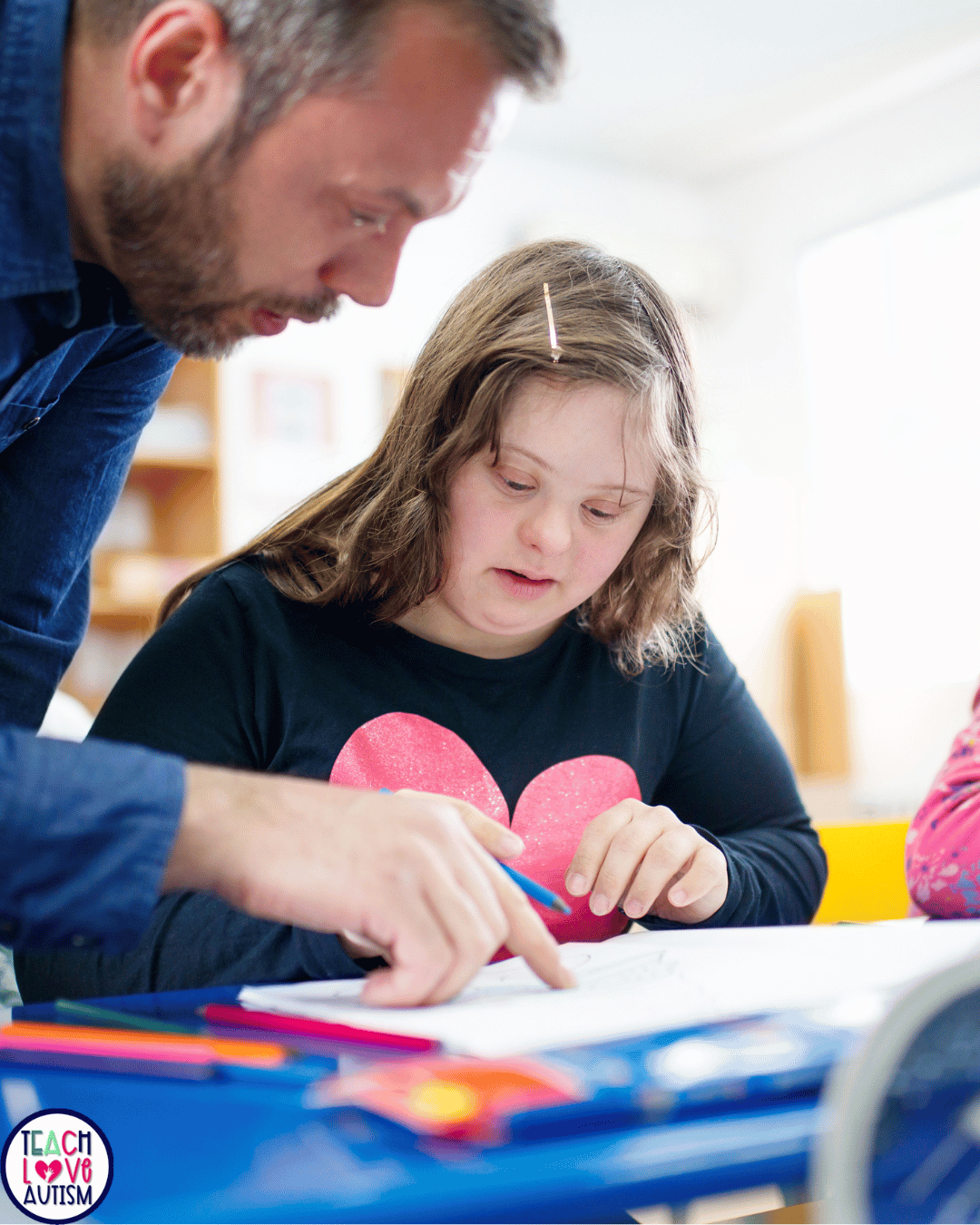
Grocery store simulations provide one of the most effective ways to help our students generalize money skills. They place learning in a familiar, functional context where they can practice decision-making without the pressure of being in the community.
Through grocery store simulations, our students are asked to think about prices, compare options, and decide whether they have enough money. These experiences mirror what happens in real stores. It helps our students understand the purpose behind the math. Instead of completing isolated problems, they are solving problems that feel relevant and meaningful.
Another benefit of grocery store simulations is how naturally they allow for differentiation. Our students can work at different levels while engaging with the same theme. Some may be matching items to prices, while others calculate totals or use strategies like next dollar up. This consistency supports growth while keeping instruction accessible. This also makes grocery store simulations a powerful tool for teaching life skills for special education.
What Grocery Store Simulation Can Look Like for Teaching Life Skills for Special Education
Grocery store simulations do not have to be elaborate to be effective. While field trips and classroom stores are valuable, they are not always realistic or easy to schedule. The good news is that our students can still practice meaningful life skills for special education through structured classroom activities that closely reflect real-world grocery shopping experiences.
In many classrooms, grocery store simulations are built into daily instruction using task cards, worksheets, and digital activities. These tools allow your students to see familiar items, prices, and scenarios while practicing money-related decision-making. Since the context stays consistent, your students can focus on applying their skills rather than trying to understand a new setup each time.
These simulations also give us flexibility. They can be used during math lessons, life skills blocks, small group instruction, work stations, or independent practice. Over time, the repeated exposure to grocery store scenarios helps our students recognize patterns and apply strategies more independently. This consistent practice is what helps life skills for special education instruction move from isolated lessons to meaningful, transferable learning.
Building a Strong Foundation With Task Card Activities
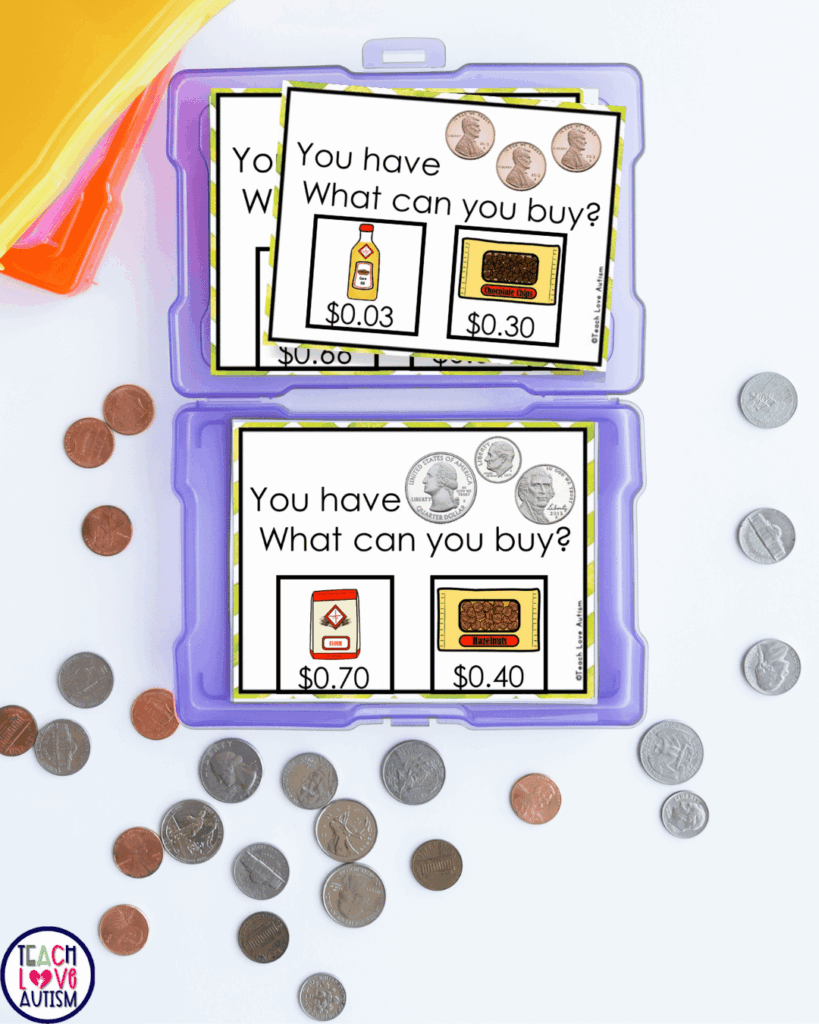
Before our students can budget, make purchasing decisions, or calculate change, they need a solid foundation in counting money within a functional context. This is where grocery store–themed counting activities play a critical role in teaching. Our students have the chance to begin connecting prices directly to real items they might see in a store.
Counting money task card activities work especially well because they allow us to differentiate while keeping the learning goal consistent. Some of our students may be matching items to coin amounts using visual supports. At the same time, others will be working with bills or larger numerical amounts. Since the grocery store theme stays the same, our students are not distracted by new contexts as the difficulty increases.
Task cards are also highly flexible in how we can use them. They fit naturally into work task boxes, classroom centers, small group instruction, or independent practice. For our students who need repeated exposure, task cards provide a predictable structure while still reinforcing meaningful life skills for special education. With time, our students will move from simply identifying money to understanding how money functions when purchasing real items.
Supporting Decision-Making With the Next Dollar Up Strategy
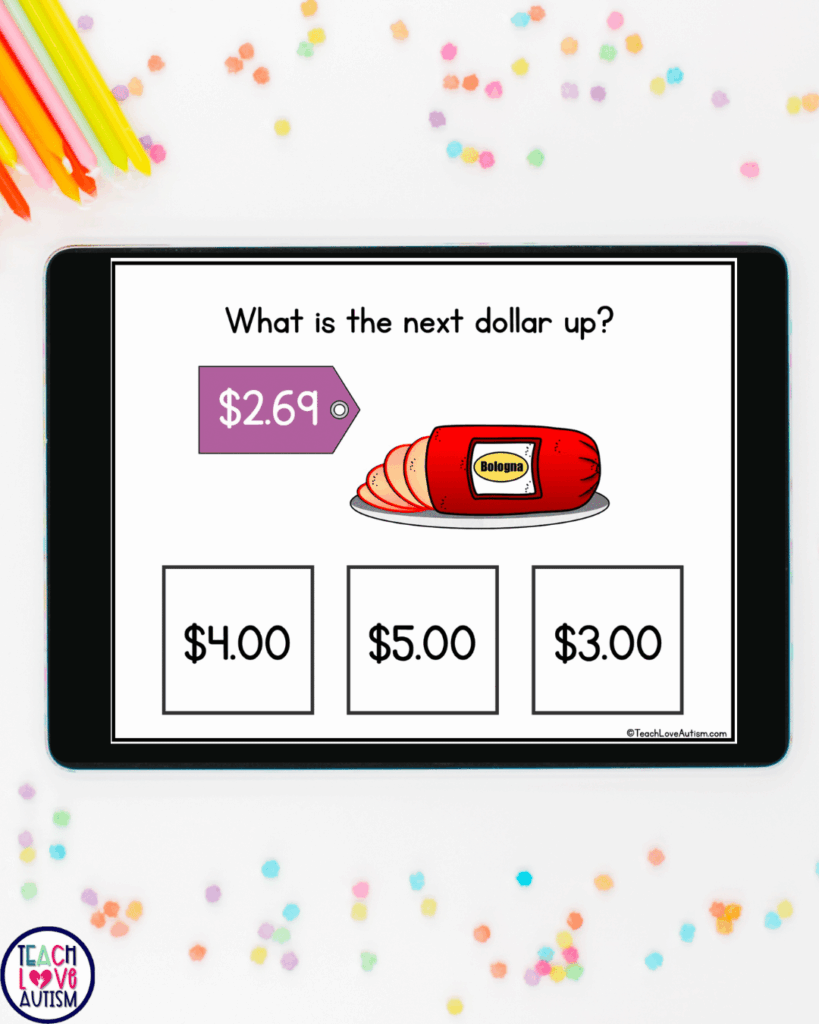
Once our students have a basic understanding of matching money to prices, the next challenge is helping them make purchasing decisions efficiently. In real grocery store situations, counting exact change is not always practical. Teaching strategies like next dollar up helps our students develop functional problem-solving skills. These are an essential part of life skills for special education.
The next dollar up strategy task cards teach our students to determine whether they have enough money to buy an item without counting every coin. Instead, they learn to round up to the next dollar amount and compare it to the price. This mirrors what often happens in real stores and allows our students to participate more independently in transactions.
Digital task cards and interactive activities work especially well for practicing this strategy because they provide immediate feedback and repeated opportunities to try again. Your students can practice in a low-pressure environment while building confidence. For many learners, mastering a strategy like next dollar up is a turning point in developing independence.
Teaching Planning and Choice Making Through Grocery Store Budgeting
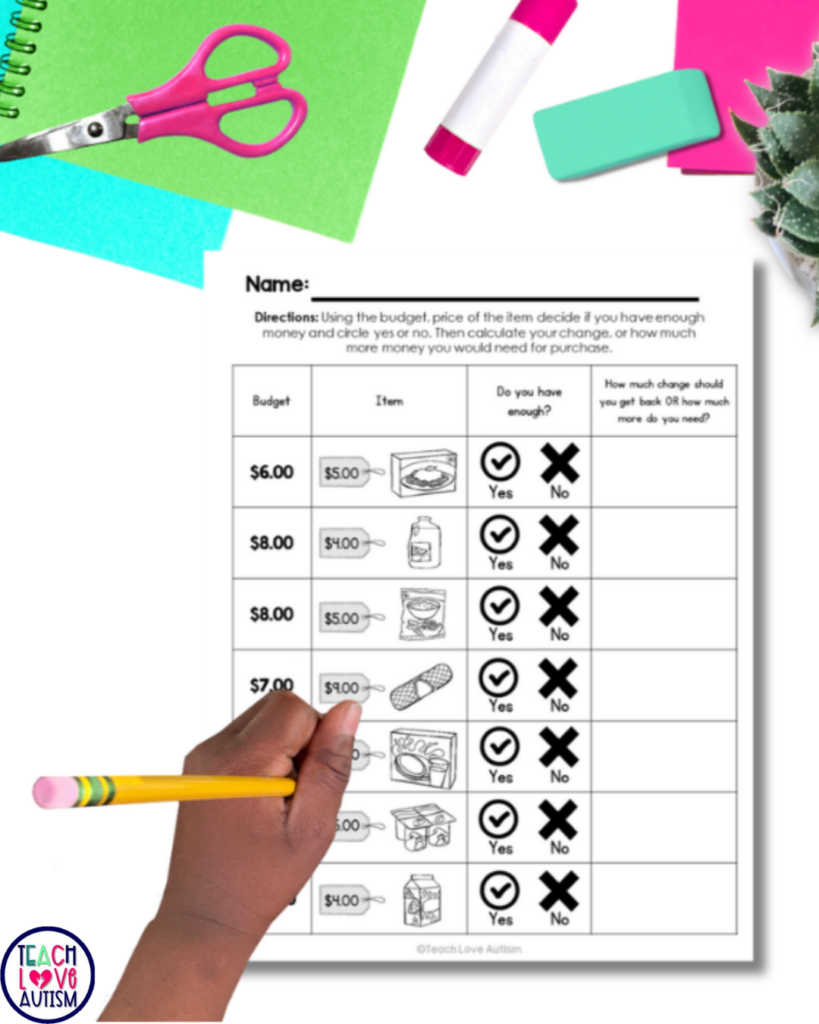
After our students begin using strategies like next dollar up, the focus can shift from individual purchases to planning an entire shopping experience. Grocery store budgeting activities help our students think ahead, manage limits, and make choices.
Budgeting introduces an important layer of decision-making. Our students are no longer just asking whether they have enough money for one item. They are considering how much money they have overall. They have to think about how prices add up, and what choices they may need to make to stay within their budget. These are the same decisions our students will face in real grocery stores. This makes budgeting a meaningful and functional skill to practice.
These Grocery Store Budget worksheets (which can only be found in the Teach Love Resource Membership) work well for life skills for special education because they break the process into manageable steps. Visual supports and realistic scenarios help reduce cognitive overload while still challenging our students to think critically. Whether used during life skills instruction, math lessons, or small group work, budgeting activities support life skills for special education by helping our students move beyond single transactions and toward greater independence in real-world situations.
Strengthening Comprehension and Context With Grocery Store Reading Activities
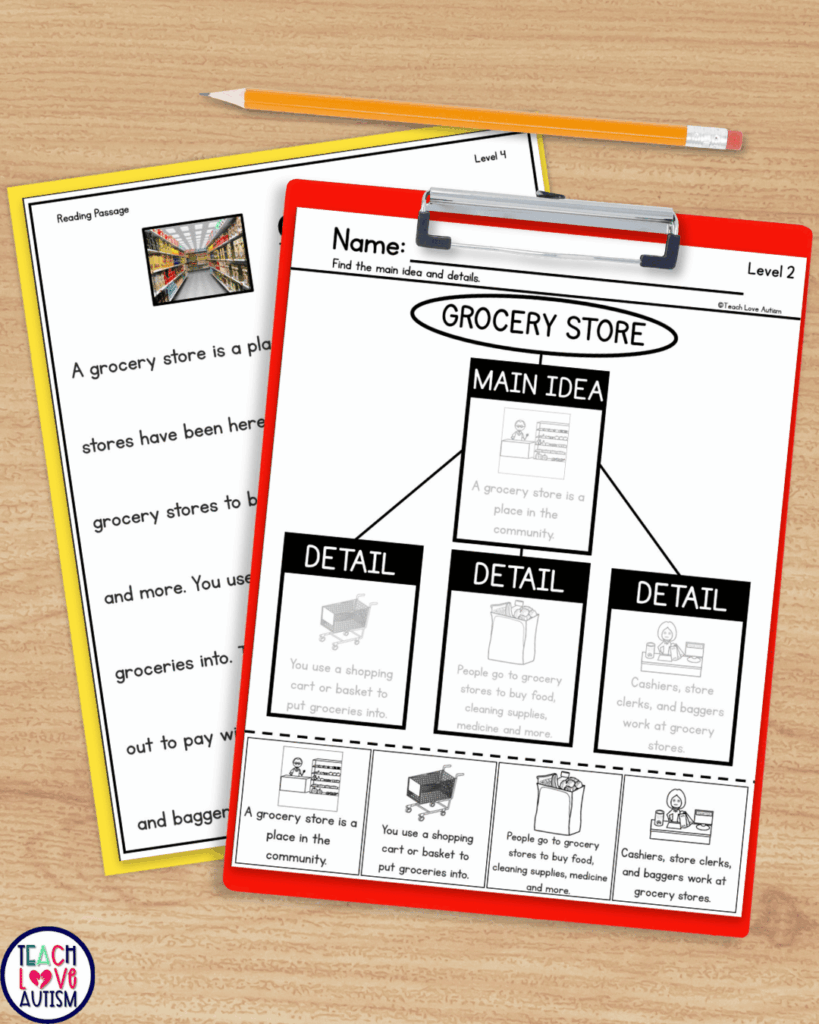
Understanding how a grocery store works is not only about handling money. Our students also need to comprehend signs, labels, and written information they encounter while shopping. Grocery store–themed reading activities support this understanding by building background knowledge and language skills that reinforce life skills for special education.
Reading passages connected to grocery store experiences help our students make sense of what they are practicing during money lessons. When our students read about shopping routines, items, and store behaviors, they are better able to connect vocabulary to real life. Passages with symbols allow our emerging readers to access content while still working on comprehension and fluency.
These Grocery Store reading activities will fit naturally into your grocery store simulation because they provide context and purpose. They can be used alongside money lessons, during literacy blocks, or as part of a weekly thematic unit. By pairing reading comprehension with functional skills, we can create a more complete approach to teaching life skills for special education. This will help our students understand not just what to do, but why they are doing it.
Layering Grocery Store Activities to Build Life Skills Over Time
One of the most effective ways to teach life skills for special education is by intentionally layering instruction. Instead of introducing all grocery store skills at once, your students will benefit from a clear progression that allows them to build confidence before moving on to more complex tasks.
Grocery store activities work best when they are introduced in stages. You might have your students begin by matching items to prices and counting money in structured formats. As they become more comfortable, strategies like “next dollar up” can be introduced to support faster, more efficient decision-making. Budgeting activities then extend that learning by asking your students to plan, compare, and make choices across multiple items.
Layering instruction also allows you to meet your students where they are without changing the overall theme. Some of your students may stay at an earlier stage longer, while others move ahead more quickly. Since all activities are grounded in the same grocery store context, instruction remains cohesive and purposeful. This intentional progression helps life skills for special education instruction feel manageable for you and meaningful for your students.
Helping Students Generalize Grocery Store Life Skills Beyond the Classroom

Teaching life skills for special education does not stop once our students can complete an activity successfully at school. The real goal is helping those skills carry over into new settings, routines, and experiences. Generalization takes time, intention, and repeated practice.
One way to support generalization is by consistently using the same language and expectations across activities. When our students hear familiar terms like enough money, next dollar, or stay within your budget, they begin to recognize those concepts, no matter which activity they are working on. This consistency helps our students connect classroom practice to real situations more naturally.
It also helps to talk through real-life connections as skills are practiced. Discussing when our students might use these skills at the grocery store, a convenience store, or even a school fundraiser reinforces the purpose behind the work. Even small conversations about prices, choices, and money use can strengthen life skills for special education instruction. It can also help our students feel more confident applying what they have learned when they are outside of the classroom.
Explore More Life Skills for Special Education Resources
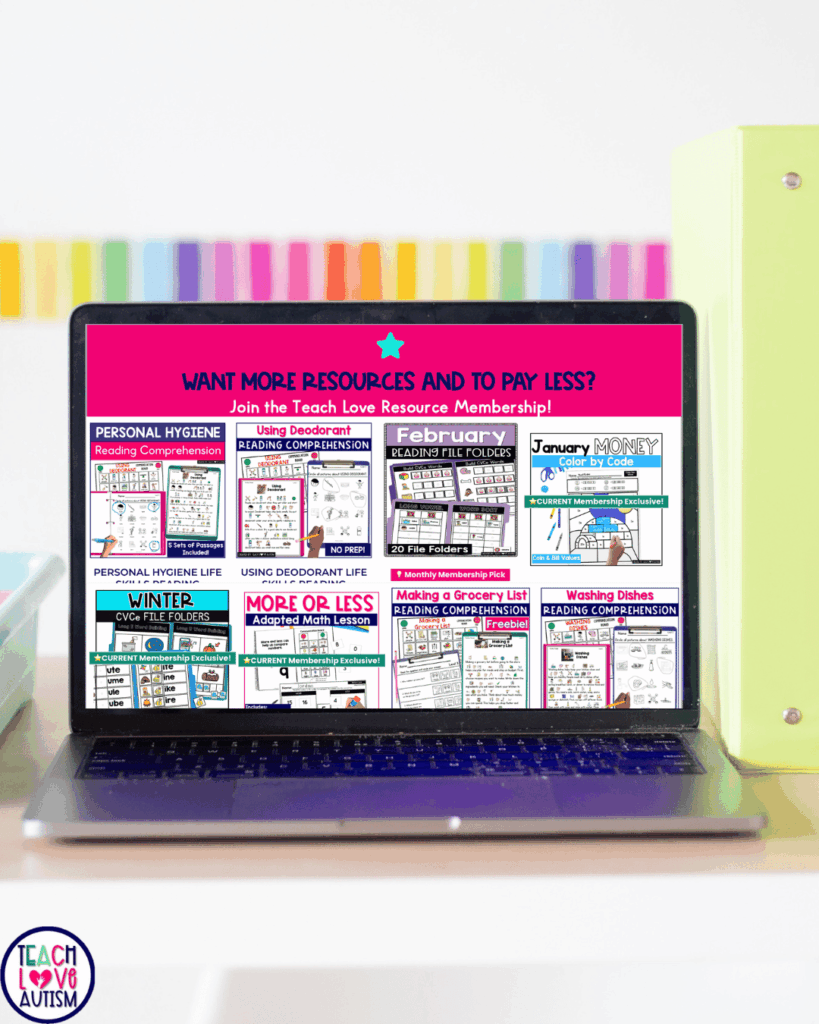
Grocery store simulations are just one way to support meaningful life skills for special education instruction in the classroom. As our students continue building independence, having a variety of tools available makes it easier to meet different learning needs and instructional goals.
Independent work tasks, adapted books, errorless learning resources, and so much more all play an important role in life skills instruction. These types of resources help reinforce routines, support skill mastery, and give your students opportunities to practice independently while still feeling successful.
If you are looking to expand your life skills instruction, exploring additional resources can help you create a well-rounded system that grows with your students. Having flexible materials on hand allows you to adjust instruction while continuing to focus on independence, confidence, and real-world application.
Making Life Skills for Special Education Memorable Through Grocery Store Simulations
Teaching life skills for special education is about preparing our students for the real moments they will encounter outside of school. Grocery store simulations offer a practical, flexible way to help our students build confidence with money, decision-making, and everyday routines in a setting that feels familiar and meaningful.
These experiences we create allow our students the chance to practice skills repeatedly without the pressure of being in the community before they are ready. Most importantly, these grocery store simulations remind us that life skills instruction does not have to be complicated to be effective. With intentional planning and consistent practice, our classrooms can become spaces where our students safely learn, make mistakes, and grow. When we focus on functional, meaningful instruction, we give our students tools they can carry with them long after they leave our classrooms.
Save for Later
Save this post to your favorite special education Pinterest board, so you can easily revisit ideas for teaching money skills, budgeting, decision-making, and comprehension through grocery store activities. Whether you are planning a life skills unit, setting up small groups, or looking for ways to help students generalize skills, having these strategies on hand can make planning feel more manageable.